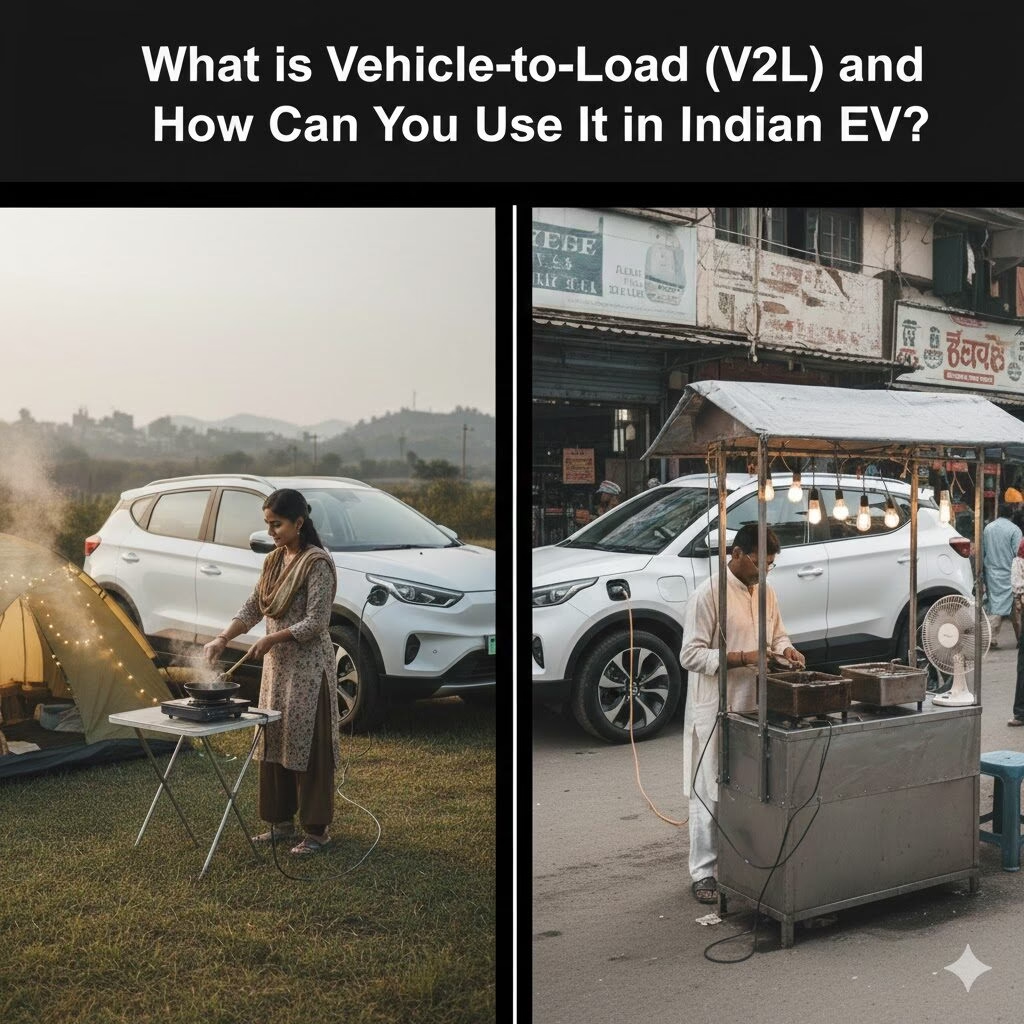
Imagine you’re at a remote campsite, your phone is dead, and your portable speaker dies right before the bonfire songs begin. Now imagine your electric car could power it all. That’s not sci-fi—it’s Vehicle-to-Load (V2L), a game-changing feature quietly arriving in Indian EVs. But what is Vehicle-to-Load (V2L), and is it just a gimmick or a genuinely useful tool for Indian conditions?
This guide breaks down V2L in simple terms, shows you which V2L cars in India offer it, and gives practical, real-world examples of how you can use your EV as a giant, mobile power bank.
V2L Explained: Your EV is More Than a Car
At its core, Vehicle-to-Load (V2L) turns your electric vehicle’s massive battery into a portable AC power source. Think of it as a giant power bank on wheels.
How It Works (Simply):
Your EV battery stores DC (direct current) power. An inverter inside the car converts this DC power into AC (alternating current)—the same type that comes from your wall sockets at home. This AC power is then sent out through a special V2L adapter plugged into the car’s charging port or a dedicated outlet.
Key Specs to Know:
- Power Output: Typically ranges from 1.5 kW to 3.6 kW.
- What It Can Power: This is enough to run essentials: multiple laptops (65W each), LED lights, a television (150W), a mini-fridge (100W), fans, phone chargers, and even power tools.
V2L vs V2H vs V2G: What’s the Difference?
These terms are often confused. Here’s the clear breakdown:
- V2L (Vehicle-to-Load): Powering external devices. Your EV powers things outside the car. Use case: Running appliances during a picnic or a power cut.
- V2H (Vehicle-to-Home): Powering your entire house. Your EV is wired directly to your home’s electrical panel via a bi-directional charger to act as a home backup during outages. This is more complex and less common in India currently.
- V2G (Vehicle-to-Grid): Selling power back to the grid. Your EV sends excess power to the public electricity grid, potentially earning you money. This is still in pilot stages globally.
In short: V2L is the simple, plug-and-play version. V2H and V2G are more complex, infrastructure-heavy systems.
Which are the V2L Cars in India Right Now?
The V2L feature is a key differentiator for some new models. Here are the pioneers:
- Vehicle to load Tata:
- Model: Tata Nexon EV.ev (the new 2024 model).
- How it Works: Uses a proprietary Vehicle to Load adapter that plugs into the charging port. It offers a 3.6 kW output.
- Real-Life Example: A family in Bengaluru used their Nexon EV’s V2L during a planned outage to power their Wi-Fi router, two fans, and a lamp for over 6 hours, using less than 10% of the battery.
- Vehicle to load BYD:
- Model: BYD Atto 3.
- How it Works: Comes with a built-in V2L adapter that plugs directly into the charging port, providing a socket on the go.
- Real-Life Example: During a recent photoshoot in Lonavala, a photographer used his Atto 3 to power professional lighting equipment and laptop charging in an area with no reliable power source.
The Adapter is Key: For most cars, you need a specific V2L adapter or Vehicle to Load cable. This is a safety device that tells the car to switch to power-supply mode. Never use a regular charging cable for this!
Practical Uses of V2L in the Indian Context
This is where V2L moves from cool feature to essential utility. Here’s how you can use it:
1. Power Cut Backup (The Urban & Semi-Urban Lifesaver):
India faces frequent load-shedding and unexpected outages. With V2L, your EV can be immediate backup.
- What you can power: 2-3 fans, LED lights, Wi-Fi router, modem, and charge phones for an entire evening.
- Stat: A standard 3.6 kW V2L system can power a typical Indian home’s essential load (fans, lights, TV) for 8-10 hours on a single charge of a 40 kWh battery.
2. Outdoor Adventures & Remote Work:
Perfect for the growing tribe of Indian road-trippers and remote workers.
- Scenario: Workation in the hills with unstable electricity. Power your laptop, portable monitor, and mobile hotspot seamlessly from your car.
- Scenario: Picnic or camping. Run a portable mini-fridge, plug in a small electric kettle for chai, or set up ambient lighting.
3. Emergency Support for Small Businesses:
A lifesaver for small shop owners or vendors.
- Case Study: A street food vendor in Delhi whose cart’s inverter failed used a customer’s V2L-enabled EV to power his griddle and lights for two hours during peak evening hours, saving his day’s business.
4. On-site Power for DIY & Construction:
Charge cordless tool batteries or run small power tools at a site with no grid connection.
Safety, Limitations, and Key Considerations
V2L is powerful but requires responsibility.
- Never Use in Enclosed Spaces: Always use V2L in a well-ventilated, open area. The car systems need airflow, and there’s a minuscule but potential risk.
- Understand Wattage: Don’t overload the system. Add up the wattage of all appliances you’re plugging in. A 3.6 kW system can handle about 30 100W bulbs simultaneously, but a single electric heater (2kW) takes up more than half the capacity.
- Monitor Battery Level: You’re draining your drive battery. Ensure you have enough charge left to get to a charger.
- Weather: Use the V2L adapter with care in rain. Keep connections dry.
The Future: Is V2L a Must-Have Feature for Indian EV Buyers?
For the average urban Indian, V2L transforms an EV from a mere vehicle into a multipurpose utility asset. It directly addresses real pain points: unreliable grid power and the need for mobility.
When evaluating your next EV, consider:
- Does the model offer built-in V2L or require a costly accessory?
- What is the power output (aim for at least 2 kW)?
- How user-friendly is the adapter system?
As brands like Tata and BYD lead, expect more V2L cars in India soon. It’s a tangible example of how EVs offer more than just zero emissions—they offer energy independence and newfound versatility for the Indian lifestyle.
Key Takeaways
- V2L turns your EV into a portable AC power source using a special adapter.
- It’s different from V2H (powers your home) and V2G (powers the grid).
- In India, Tata Nexon EV and BYD Atto 3 currently offer this feature.
- Practical uses are immense: from power cut backup to enabling remote work and supporting small businesses.
- Always prioritize safety: use in open areas, don’t overload, and monitor your car’s battery.
Frequently Asked Questions (FAQs)
Q1: Can I add V2L to my existing EV that doesn’t have it?
No, not safely or easily. V2L requires specific hardware (a bi-directional inverter) and software integration built into the car by the manufacturer. Aftermarket modifications are not recommended and will void your warranty.
Q2: Where do I get a genuine V2L adapter or Vehicle to Load cable?
Always purchase it from the official vehicle manufacturer or their authorized dealerships. Using non-genuine adapters can damage your car’s electrical system and is a major safety hazard.
Q3: Does using V2L damage my EV’s main battery?
When used as intended, V2L does not cause significant extra damage. The battery management system protects it. However, frequent deep discharges (like using V2L until the car battery is at 10%) can contribute to slightly faster long-term degradation, similar to regular driving.
Q4: What’s the most powerful appliance I can run with V2L in India?
A typical 3.6 kW system can handle a standard 1.5-ton split AC (which requires ~1.5 kW at startup) or an induction cooktop on a low setting. However, it’s best to avoid heavy motor-based appliances like water pumps.
Q5: Are there any tax or insurance implications for using V2L in India?
Currently, there are no specific tax implications. For insurance, it’s crucial to inform your insurer that your vehicle has a V2L feature. Using it should be covered under standard policies, but failing to declare a modification (if added later via non-OEM parts) could void your claim.