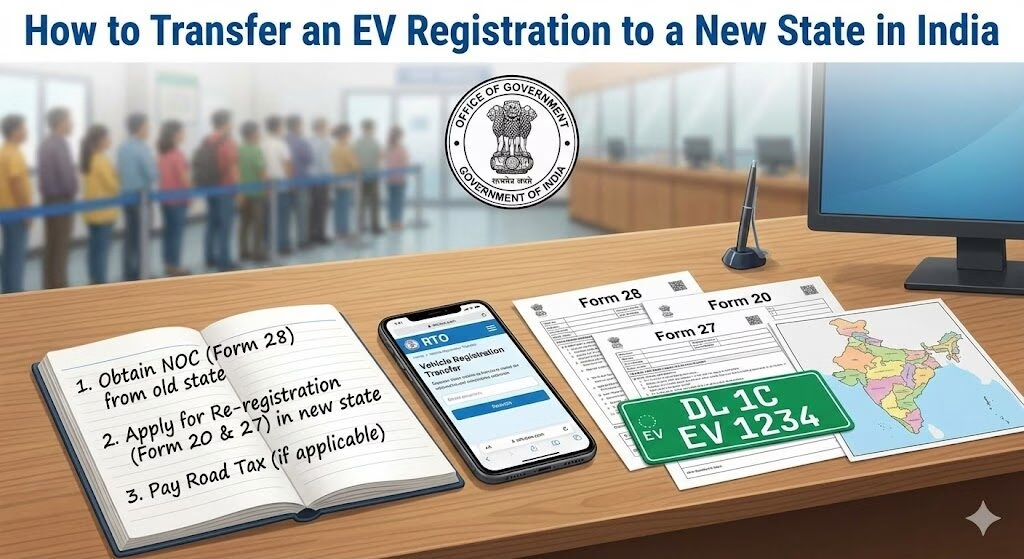
Moving to a new state in India brings both excitement and administrative challenges, especially when it comes to transferring your EV registration. For electric vehicle owners, understanding the specific process for inter state vehicle transfer is crucial to avoid legal complications and ensure smooth driving in your new location.
This comprehensive guide walks you through the entire process of transfer of vehicle registration from one state to another, covering costs, documentation, and the latest regulatory updates for 2024.
Why Transfer Your EV’s Registration?
When you move to a new state for more than 12 months, the Motor Vehicles Act, 1989 requires you to re-register your vehicle in the new state. This process, known as transfer of vehicle registration from one state to another, is mandatory for several reasons:
- Legal Compliance: Avoid fines for driving with out-of-state registration
- Resale Value: Maintain proper documentation for future sale
- Insurance Claims: Ensure smooth insurance processing
- Tax Compliance: Pay road tax in your state of residence
New Rules for Inter State Vehicle Transfer in India
Recent updates have streamlined the inter state vehicle transfer new rules India:
- Extended Timeframe: You now have 12 months (increased from 3 months) to complete the transfer after moving
- Tax Refund: You can claim a refund of the balance road tax from your previous state
- No NOC Requirement: The No Objection Certificate (NOC) requirement has been simplified
- Digital Integration: Partial online processing available in many states
Step-by-Step Process for Vehicle Registration Transfer
Step 1: Obtain Necessary Documents
Before initiating the transfer of vehicle registration from one state to another online, gather these essential documents:
- Form 27: Road Tax Refund Application
- Form 28: Application for NOC
- Form 29 & 30: Notice of Transfer & Application for Transfer of Ownership
- Original RC Book
- Valid Insurance Papers
- PUC Certificate (valid for EVs too)
- Address Proof in new state
- Chassis Imprint
Step 2: Apply for NOC from Original RTO
Visit your original RTO and submit:
- Form 28
- Original RC
- Insurance copy
- Address proof for new state
The NOC is typically issued within 7-10 days.
Step 3: Pay Road Tax in New State
Once you receive the NOC, visit the new RTO and:
- Submit NOC and required documents
- Pay road tax for the new state
- Obtain tax payment receipt
Step 4: Vehicle Inspection
Your EV will undergo physical inspection at the new RTO to verify:
- Engine and chassis numbers
- Vehicle condition
- Document authenticity
Step 5: Registration at New RTO
Submit all documents including:
- Form 29 & 30
- NOC from previous RTO
- Road tax payment receipt
- Address proof
- Insurance documents
Cost Breakdown for RTO Transfer Charges
Understanding RTO transfer charges from one state to another is crucial for budgeting. Here’s a detailed breakdown:
For Two-Wheelers (Transfer of bike registration from one state to another cost in India):
- Road Tax: 4-8% of vehicle value
- Service Charges: ₹500-₹1,000
- Smart Card Fee: ₹200-₹400
- Handling Charges: ₹300-₹600
- Total Estimated Cost: ₹3,000-₹8,000
For Four-Wheelers (RTO transfer charges from one state to another 4 wheeler):
- Road Tax: 8-15% of vehicle value
- Service Charges: ₹1,000-₹2,000
- Smart Card Fee: ₹400-₹600
- Handling Charges: ₹500-₹1,000
- Total Estimated Cost: ₹8,000-₹25,000
Vehicle Transfer Fees Calculator India: Estimating Your Costs
Use this formula to estimate your transfer of vehicle registration from one state to another cost in India:
Total Cost = (Vehicle Invoice Price × New State Tax Rate) + Fixed RTO Charges + Service Fees
Example Calculation for ₹10 Lakh EV:
- Road Tax (8%): ₹80,000
- RTO Charges: ₹2,000
- Service Fees: ₹1,500
- Total Estimated: ₹83,500
Online Process for Registration Transfer
Many states now offer partial transfer of vehicle registration from one state to another online through:
- Parivahan Sewa Portal
- State RTO websites
- Mobile applications
Online Steps:
- Fill application forms digitally
- Upload required documents
- Pay fees online
- Schedule physical inspection
- Track application status
Special Considerations for Electric Vehicles
EV owners should note these additional points:
- Subsidy Documentation: Keep FAME-II subsidy papers
- Battery Warranty: Ensure transfer doesn’t affect battery warranty
- Charging Infrastructure: Update location in manufacturer apps
- Service Network: Inform service center about location change
Required Forms: RTO Transfer Form 28 29 30 PDF Download
You can download the necessary forms through:
- Official Parivahan Website (parivahan.gov.in)
- State Transport Department Portals
- Authorized RTO Agent Websites
Ensure you use the latest versions of these forms to avoid rejection.
Common Challenges and Solutions
Challenge 1: Delay in NOC Issuance
Solution: Follow up regularly and maintain all document copies
Challenge 2: Tax Calculation Disputes
Solution: Keep original invoice handy and understand state tax slabs
Challenge 3: Documentation Errors
Solution: Double-check all forms before submission
Timeline for Complete Process
- NOC Application: 7-10 days
- New Registration: 15-30 days
- Tax Refund: 30-60 days
- Total Duration: 45-90 days
Tips for Smooth Registration Transfer
- Start Early: Begin process immediately after moving
- Professional Help: Consider hiring an RTO agent for complex cases
- Document Copies: Maintain multiple copies of all documents
- Follow-up: Regularly check application status
- Digital Payments: Use online payment methods for better tracking
State-Specific Variations
While the basic process remains similar, some states have specific requirements:
- Karnataka: Higher road tax rates
- Delhi: Stringent pollution norms
- Maharashtra: Additional local body taxes
- Gujarat: Simplified online processes
Legal Implications of Non-Compliance
Failing to complete transfer of vehicle registration from one state to another can lead to:
- Fines up to ₹10,000
- Vehicle Impoundment
- Insurance Claim Rejection
- Legal Prosecution
Conclusion: Planning is Key
The process for transfer of vehicle registration from one state to another requires careful planning and documentation. While it might seem daunting, following this systematic approach ensures a smooth transition. Remember that the inter state vehicle transfer new rules India have made the process more streamlined, and taking professional help can save time and avoid complications.
Start the process early, keep all documents organized, and use digital platforms wherever possible to make your EV registration transfer hassle-free.
Frequently Asked Questions (FAQs)
Q1: How long does the entire registration transfer process take?
The complete transfer of vehicle registration from one state to another typically takes 45-90 days, depending on state efficiency and document processing.
Q2: Can I drive my vehicle during the transfer process?
Yes, you can drive with valid documents from both states during the transfer period, but you must complete the process within 12 months of moving.
Q3: Is the process different for electric vehicles?
The basic process is similar, but EV owners should maintain additional documentation related to subsidies and battery warranty during the transfer.
Q4: How much refund can I get on my original road tax?
You can claim a refund for the remaining period of road tax paid in your previous state. The calculation is based on the unexpired period of tax validity.Q5: Can I complete the entire process online?
While many states offer partial online processing, physical inspection and document verification at the RTO are still mandatory steps in most cases.