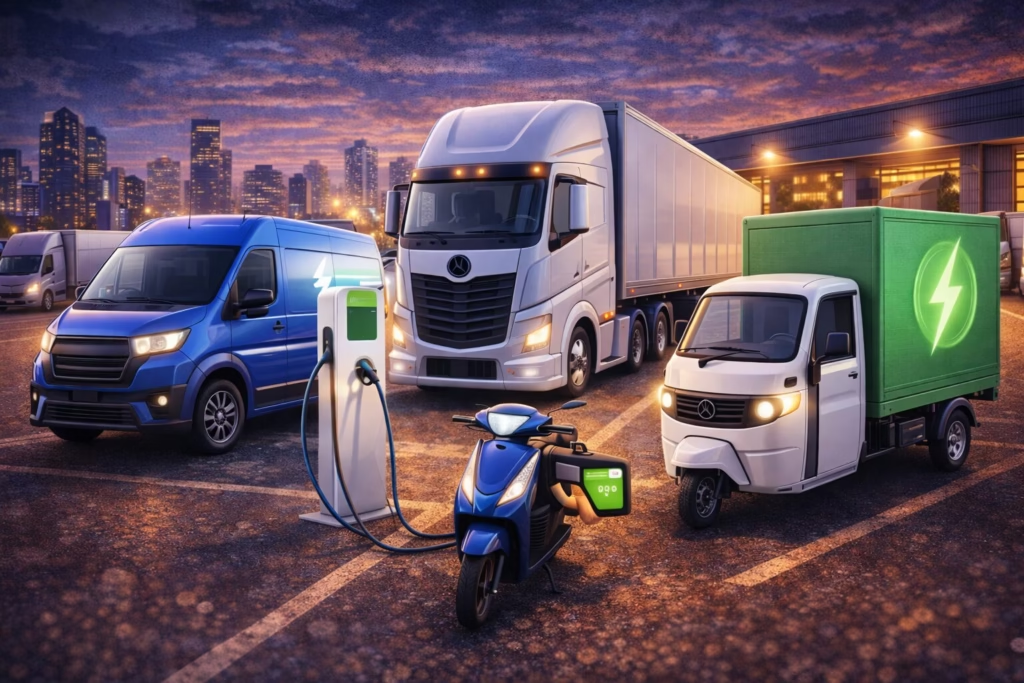
Battery swapping networks are rapidly emerging as an alternative to traditional EV charging, especially in India’s fast-growing electric vehicle ecosystem. Systems like SUN Mobility and networks backed by players such as Mooving are deploying modular, swappable battery infrastructure that lets riders exchange a depleted battery for a fully charged one in minutes — rather than waiting hours at a charger. This model helps increase EV utilization, reduce range anxiety, and lowers upfront vehicle costs. In this post, we break down how these modular systems work, real-world examples, their benefits and limitations, and evolving business opportunities such as Battery swapping station franchises in India.
What Is SUN Mobility’s Battery Swapping Technology?
SUN Mobility is a Bengaluru-based energy services company focused on building large-scale battery swapping infrastructure for EVs — especially two-wheelers, three-wheelers, and even larger vehicles.
- The company separates the battery from the vehicle and offers it via a pay-as-you-go Battery-as-a-Service (BaaS) model, reducing upfront EV purchase cost.
- Its modular battery packs are designed so a vehicle can carry only the number of packs needed for required range, and these packs are quickly swapped at SwapX stations.
- SUN Mobility’s battery packs are compatible with multiple EV types, creating a vehicle-agnostic ecosystem that supports wide EV adoption.
As of 2025, SUN Mobility’s network spans hundreds of swapping stations in 20+ Indian cities, powering tens of thousands of EVs with millions of swaps monthly.
How Does a Swapping Battery Station Work?
At a swapping battery station, such as those deployed by SUN Mobility or Mooving battery swapping, the process is simple:
- A rider pulls into the swap station.
- The depleted battery is taken out and replaced with a fully charged modular battery pack.
- The swap typically takes only a few minutes — much faster than most charging processes.
These stations are often positioned at high-traffic areas like city hubs, transit points, or fuel station locations — some even strategically placed where drivers search for “Battery swapping stations near me” on maps and apps.
What Is the SwapX Station by SUN Mobility?
SUN Mobility’s SwapX tech is a compact, modular battery swapping station designed to support high-density battery exchange infrastructure:
- SwapX units are compact enough to be installed in small spaces and operate with standard power supply.
- They are intended to be rolled out en masse to cover extensive areas in urban and peri-urban locations, comparable to conventional fuel stations, but for swappable EV power packs.
This modular strategy lets network builders scale quickly without the footprint and downtime constraints tied to traditional charging infrastructure.
What Are the Pros of Battery Swapping Networks?
✔ Faster Turnaround Time Compared to Charging
Swapping batteries cuts downtime dramatically — riders spend just minutes instead of waiting at a charger. This is essential for commercial and fleet users where time equals money.
✔ Lower Upfront EV Cost
Separating the battery from the vehicle means buyers don’t need to pay the full cost of a battery up front. Instead, they subscribe to a swapping service (BaaS), leaving them free to pay for only what they use.
✔ Supports Higher Utilization for Commercial Fleets
For delivery services and logistics fleets, quick swapping means vehicles can stay on the road longer, increasing productivity and service levels.
✔ Reduces Range Anxiety
Drivers can plan routes with confidence, knowing they can exchange batteries conveniently at swap points rather than hunt for charging outlets.
✔ Environmentally Efficient Grid Charging
Swappable batteries can be charged off-peak when grid demand is low, increasing grid stability and potential integration with renewable power.
What Are the Cons of Battery Swapping Networks?
✖ Infrastructure Investment and Space Needs
Deploying swapping stations — though more compact than traditional charging — still requires land, power access, and capital investment, especially if targeting widespread coverage.
✖ Standardization and Compatibility Challenges
Swapping requires modular batteries that fit multiple EV models. While SUN Mobility uses open architecture, not all EVs have swappable designs, which limits initial compatibility.
✖ Battery Ownership and Trust Issues
Riders may be wary of swapping their own battery for another if battery health isn’t transparently tracked, making trust and quality assurance key operational needs.
Real World Examples: Lessons From SUN Mobility and Mooving
📍 SUN Mobility — Scaling Through Partnerships
SUN Mobility has grown its network with strategic partnerships, including a major joint venture with IndianOil to deploy swapping services across thousands of fuel stations.
Integration with existing fuel infrastructure aims to make swap points ubiquitous and easy to find, much like traditional petrol stations — turning battery swapping into a familiar part of the mobility landscape.
The modular design has also been extended to heavier EV segments. For example, SUN Mobility rolled out innovative modular swapping technology for heavy vehicles, including buses — showing swapping is not just for small EVs.
📍 Mooving — A Growing Network in India
Mooving operates over 400 smart battery swap stations across India for two-wheelers and three-wheelers, combining battery management systems (BMS) and IoT connectivity for smooth operations.
Mooving also provides battery leasing, supporting users who want switching services without owning batteries — expanding the ecosystem beyond just swap points.
What Are Battery Swapping Company Options in India?
India’s swapping ecosystem is expanding beyond SUN Mobility and Mooving. A range of battery swapping companies are building infrastructure or services, including:
- Battery Smart — operates 1,500+ stations in Delhi, enabling millions of swaps.
- LithionPower, VoltUp, BatteryPool, Okaya, and others — building hardware, software, and networks.
- Yulu (via Yuma Energy) — battery swapping for micromobility fleets integrated with ride and delivery services.
These players are collectively expanding the market and offering alternatives for users seeking Battery swapping stations near me through mobile apps and location services.
Can You Start a Battery Swapping Station Franchise in India?
Yes — battery swapping station franchising is emerging as a business opportunity:
- SUN Mobility has publicly invited partners to join its franchise network to scale swap points nationwide.
- Other energy companies and swap tech providers are also enabling franchise models to grow swap station footprints and local entrepreneurship.
- A franchise setup often involves space investment, infrastructure setup, and revenue share with the network provider.
As battery swapping demand rises with EV adoption, franchise models make it easier for entrepreneurs to participate in the EV ecosystem and generate returns from a growing mobility trend.
Where Can I Find SUN Mobility Swap Points Near Me?
SUN Mobility and partner swap stations are increasingly listed on local maps and navigation platforms. For example, there are dedicated swap points in Bangalore (e.g., industrial area swap station), often open throughout the day for quick swaps for registered EV users.
Users seeking “SUN Mobility Swap point near me open now” can check local EV mapping tools and apps or the SUN Mobility partner portal for real-time swap station locations and availability.
Conclusion
Modular and swappable battery networks — championed by pioneers like SUN Mobility and supported by networks like Mooving — are transforming how EVs are refueled in India. By separating the battery from vehicle ownership and enabling fast swaps, these systems address key barriers such as range anxiety, high upfront costs, and long charging times. While challenges remain in infrastructure rollout, compatibility, and trust systems, the growth of swap station franchises and expanding networks shows strong potential for scalable, user-friendly EV refueling infrastructure in the years ahead.