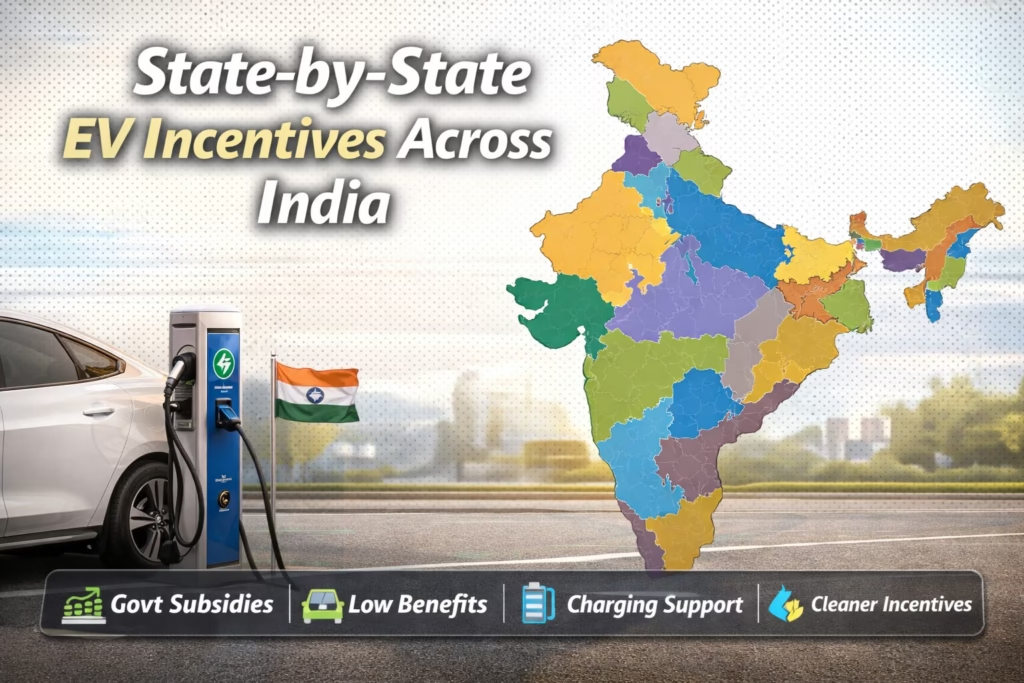
Electric vehicles (EVs) are accelerating in India, supported not just by central policy but by a growing patchwork of state-level incentives designed to reduce cost, boost adoption, and build infrastructure. As the nation pushes toward cleaner mobility, knowing which incentives are available where can drastically affect the economics of owning or operating an EV—whether you’re a first-time buyer, fleet operator, or business investor.
This comprehensive guide breaks down state-by-state EV incentives across India, covering subsidies, tax waivers, registration concessions, charging support, and policy details that influence your buying and ownership decisions.
Quick Intro – Why State Incentives Matter
India’s central government set the foundation with the Faster Adoption and Manufacturing of Electric Vehicles (FAME-II) policy, offering subsidies on EVs and infrastructure. However, many benefits now come from state EV policies as well. These incentives can:
- Lower upfront cost of EV purchase
- Reduce recurring costs (tax, registration, interest subsidy)
- Support charging infrastructure build-out
- Encourage commercial & fleet electrification
State policies vary widely in scope, duration, and eligibility. Some are more generous for two-wheelers, others prioritize buses or four-wheelers.
Andhra Pradesh – Balanced EV Push
Key Incentives:
- Registration fee exemption for EVs
- Road tax waiver
- Capital subsidies on EV charging stations for commercial and residential use
- Incentives for EV manufacturing units
What It Means:
Buyers get upfront cost relief; businesses building chargers or EV supply chains benefit from state support.
Assam – Early Support for Adoption
Key Incentives:
- Road tax and registration fee waivers
- Subsidies on EV two-wheelers and three-wheelers
- Subsidies for battery charging infrastructure
What It Means:
Assam’s incentive mix favors smaller urban EVs and public charging expansion.
Bihar – Focus on School & Public Transport
Key Incentives:
- Purchase incentives for e-buses and e-autos
- Subsidies on EV charging equipment
- Concessions on road tax for EVs
What It Means:
Encourages adoption in public transportation and micro-mobility segments.
Chhattisgarh – Tax Relief & Charging Support
Key Incentives:
- Road tax exemptions for EVs
- Registration fees waived for EVs
- Capital subsidy for public charging stations
What It Means:
Significant relief on purchase and ownership costs; beneficial for both personal EV owners and entrepreneurs building EV infrastructure.
Delhi – Among the Most Generous EV Policies
Key Incentives:
- Zero road tax and registration fees for private EVs
- Interest subvention on EV loans
- Subsidies for battery swapping and public charging infrastructure
- Additional incentives for e-two-wheelers and e-three-wheelers
What It Means:
Delhi offers some of the highest cost savings for EV buyers and aggressive support for charging and loans.
Goa – Targeted EV Adoption Support
Key Incentives:
- Exemption from road tax and registration fees
- Subsidy on installation of home EV chargers
- Incentives for EV infrastructure development
What It Means:
Goa’s policy focuses on both the demand side (buyers) and supply side (charging builders).
Gujarat – Industry & Infrastructure Focus
Key Incentives:
- Faster registration processing
- Road tax exemption
- Capital subsidy for setting up charging stations
- Support for EV manufacturing and R&D
What It Means:
Gujarat leverages its industrial ecosystem to promote EV business growth and infrastructure.
Haryana – Purchase & Charging Assistance
Key Incentives:
- Registration fee waiver
- Interest subsidies on EV loans
- Grants for EV charging stations
What It Means:
Haryana balances incentives for buyers and charging expansion, helping smaller operators enter the EV ecosystem.
Himachal Pradesh – EV Adoption Across Segments
Key Incentives:
- Road tax concessions
- Registration fee waiver for EVs
- Subsidies for electric public transport vehicles
- Charging infrastructure support
What It Means:
Himachal promotes both private EV adoption and electrified transport fleets.
Jharkhand – Simplified Tax Structure
Key Incentives:
- Road tax and registration fee exemptions
- Supportive environment for EV and component manufacturing
What It Means:
Lower initial costs and industrial incentives aim to attract both buyers and producers.
Karnataka – Comprehensive EV Policy
Key Incentives:
- Registration fees waived
- Road tax exemption for personal and commercial EVs
- Capital subsidies for charging infrastructure
- Incentive packages for EV manufacturing and R&D
What It Means:
Karnataka’s approach is broad, supporting buyers, infrastructure developers, and EV ecosystem companies.
Kerala – Consumer & Infrastructure Boost
Key Incentives:
- EV registration and tax benefits
- Subsidies on EV chargers
- Encouragement for e-buses in public transport
What It Means:
Kerala supports EV ownership and charging availability with focus on urban fleets.
Madhya Pradesh – Balanced Incentives
Key Incentives:
- Registration fee and road tax exemptions
- Subsidies for electric buses and taxis
- Capital incentive for charging infrastructure
What It Means:
Encourages both individual EV buyers and commercial EV adoption.
Maharashtra – Focus on Public & Commercial EVs
Key Incentives:
- Tax concessions for EVs
- Incentives for public transport electrification
- Support for charging infrastructure
What It Means:
Targets electrification of fleets and public transport, along with user savings.
Odisha – EV Adoption & Clean Mobility
Key Incentives:
- Registration and tax exemptions
- Support for EV infrastructure setup
What It Means:
Removes upfront cost hurdles and promotes wider EV usage.
Punjab – EV & Charging Support
Key Incentives:
- Road tax and registration fee waiver
- Financial support for battery swapping and public charging networks
What It Means:
Supports individuals and businesses planning battery and charging solutions.
Rajasthan – Growing EV Support Ecosystem
Key Incentives:
- EV registration and tax benefits
- Subsidies for setting up charging stations
What It Means:
A balanced program for EV growth and infrastructure expansion.
Tamil Nadu – Policy Supporting EV Manufacturing & Charging
Key Incentives:
- Road tax exemptions
- Investment promotion for EV makers
- Subsidies for charging infrastructure
What It Means:
A broad policy aiming at industry growth alongside consumer incentives.
Telangana – Push on Infrastructure & Adoption
Key Incentives:
- Road tax and registration fee waivers
- Subsidies for EV chargers
- Industry incentives for EV production
What It Means:
Mixed-benefit approach for buyers and producers alike.
Uttar Pradesh – Demand & Supply Boost
Key Incentives:
- EV tax / registration concessions
- Grants for charging stations
What It Means:
Supports first-time EV buyers and infrastructure builders in key urban zones.
Uttarakhand – Destination & Residential Incentives
Key Incentives:
- Exemptions on fees and taxes for EVs
- Incentives for public charging stations
- Push for tourist EVs (e-cabs, e-taxis)
What It Means:
Tailored support for both local residents and tourist-oriented EV operations.
West Bengal – Emerging Support for Electrification
Key Incentives:
- Registration and tax benefits
- Charging infrastructure support
What It Means:
Expanding EV policy to a wider region, attracting both personal and commercial EV users.
How These Incentives Change Ownership Math
Upfront Cost Reduction
Registration fee and road tax waivers significantly reduce the price you pay at the dealership—often several tens of thousands to lakhs depending on the state.
Charging Infrastructure Incentives
Capital subsidies or grants for charging stations lower the financial barrier for entrepreneurs and society stakeholders, while home charger incentives benefit individual owners.
Loan & Financing Subsidies
Some states offer interest subventions on EV loans, lowering monthly repayments and improving total cost of ownership.
Fleet & Commercial Benefits
States targeting e-buses, delivery EVs, and urban fleets translate into better economics for businesses shifting to electric.
FAQs
Do all states offer the same EV incentives?
No. Each state has its own EV policy with different tax rates, subsidies, and focus areas.
Are incentives permanent?
Most incentives are time-bound or subject to annual budgets. Always check the latest official policy before purchase.
Can incentives stack with central government benefits?
Yes. State incentives are often in addition to central subsidies such as FAME and GST exemptions.
Is there support for charging infrastructure?
Yes. Many states incentivize both public charging stations and home charger installations.
Summary
EV incentives across India are steadily evolving. While central government schemes laid the foundation, state EV policies now shape real cost benefits for buyers, businesses, and infrastructure developers. From registration and tax waivers to charging support and financing subsidies, these varied incentives make EV adoption more attainable, reduce total cost of ownership, and support a cleaner transportation future.
As electric mobility grows, staying updated with state policy changes ensures that EV shoppers and businesses capture the maximum available benefits. For prospective owners across India, understanding your state’s incentives can significantly influence purchase decisions and long-term ownership costs.