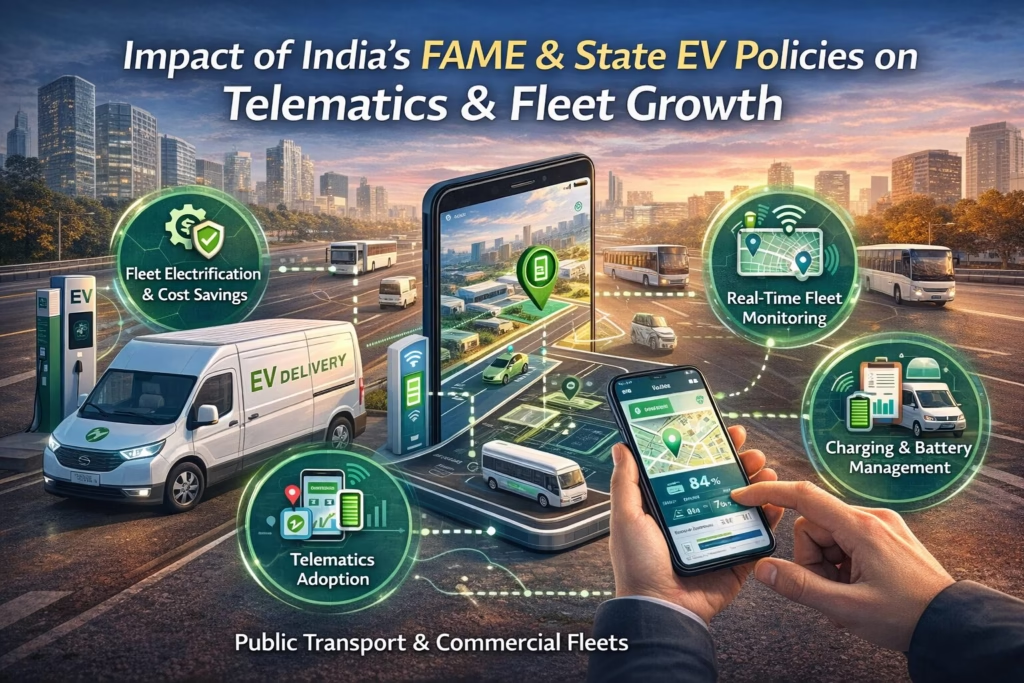
India’s transition to electric mobility is rapidly reshaping how fleets operate, collect data, and utilise connected technologies. Central schemes like FAME-II (Faster Adoption and Manufacturing of (Hybrid &) Electric Vehicles) and diverse state-level EV policies are driving stronger fleet electrification and adoption of telematics solutions that help manage and optimise EV fleets across commercial, logistics, and public transport use cases.
Understanding FAME & State EV Policies in India
FAME-II: A National Demand Driver
The FAME-II scheme, which ran with an outlay of around ₹10,000-11,500 crore between 2019 and 2024, offered financial incentives for EV purchases and charging infrastructure development across two-, three-, four-wheelers and buses. Its core aim was to make EVs more affordable and stimulate EV adoption — especially in commercial and public transport segments where fleet electrification has high impact on overall emissions and operational costs.
The scheme allocated a major portion of its budget to demand incentives, which helped reduce the upfront cost gap between EVs and traditional internal combustion engine vehicles, especially for two- and three-wheelers — widely used in fleet operations.
These incentives had a direct influence on fleet decisions by lowering total cost of ownership (TCO) and reducing financial barriers to entry, encouraging companies to consider electrification and adopt supporting technologies like telematics for fleet management.
How EV Policies Influence Fleet Electrification
1. Lower Costs Encourage Fleet Transition
Subsidies and state tax exemptions boost the economic case for fleets to switch from ICE vehicles to EVs, especially in high-usage sectors such as delivery services, shared mobility and logistics. By reducing upfront expenses and ongoing operating cost differences, fleet owners see attractive returns, which in turn justifies investment in technologies like telematics for performance monitoring and route planning.
When fleets electrify, data-driven fleet monitoring becomes essential because EVs are more sensitive to range, charging availability, and battery health — all areas where telematics solutions provide real-time insights.
2. State Policies Add Local Incentives & Fleet Targets
Many Indian states supplement national policy with state-specific EV policies that further incentivise fleet electrification. These can include:
- Road tax waivers
- Registration fee exemptions
- Direct purchase incentives
- Fleet electrification targets in public transport and logistics hubs
States like Delhi, Uttar Pradesh, Maharashtra, Tamil Nadu and Karnataka have crafted EV policies that combine tax benefits and infrastructure support to drive regional EV adoption. These actions foster local fleet uptake and stimulate investment in telematics and connected tech.
State mandates to electrify a certain percentage of commercial or public fleets encourage businesses to adopt telematics systems to monitor EV performance, reduce operational risk, and manage charging logistics.
Telematics: Why It Matters for EV Fleets
Telematics systems — which include GPS tracking, trip logs, battery usage data, charging session histories, and predictive maintenance alerts — become critical enablers in electric fleet deployment. As fleets shift to EVs due to policy incentives:
1. Operational Efficiency Improves
Telematics helps fleet operators:
- Track vehicle utilisation in real time
- Reduce downtime by identifying charging needs before they become critical
- Optimise routes based on available charging infrastructure
This is particularly valuable for commercial fleets whose operational schedules depend on reliable uptime.
2. Battery & Charging Data Is Vital
Unlike ICE vehicles, EV performance depends heavily on battery health, charging patterns, and energy use. A telematics system integrated across a fleet lets operators:
- Monitor battery state-of-health (SOH)
- Predict battery degradation over time
- Schedule charging during off-peak energy hours
These insights help reduce long-term costs and support better asset management.
3. Safety and Compliance Improve
Telematics enhances fleet governance by logging driving behavior, speed compliance, and performance patterns over time. These metrics support fleet safety programs and reduce liabilities tied to risky driving or suboptimal charging practices.
Combining Telemetics with Policy-Driven Growth
FAME & Infrastructure Buildout
Government policy not only subsidises vehicle purchases but also supports charging network expansion — a key component of fleet viability. As charging infrastructure increases under schemes like FAME-II and PM E-Drive, telematics use becomes even more valuable in planning charging stops and reducing range anxiety.
Fleet managers can then integrate charger availability into routing tools, helping EV trucks and buses meet schedules without bottlenecks.
State Policies & Regional Growth
State policies are instrumental in localized fleet transformation. For example, fleet electrification mandates in port cities or urban transit systems directly influence fleet procurement strategies and push operators to adopt telematics early to justify new investments and align with regional EV targets.
Real-World Impacts on Telematics Adoption
As fleet electrification accelerates:
Fleet Operators Embrace Data Tools
Companies electrifying delivery vans, commercial cycles, or passenger services increasingly choose telematics tools as part of their EV transition strategy. These tools help them:
- Control energy costs
- Improve fleet uptime
- Predict maintenance needs before breakdowns occur
Such capabilities are essential for operational scalability when EV fleets expand across regions.
Public Transport Electrification Drives Tech Uptake
States that mandate or incentivise EV buses or public transport services spur adoption of vehicle tracking and monitoring systems that tie directly into telematics platforms. This type of connected data flow lets transport authorities manage large EV groups more efficiently.
Challenges & Opportunities Ahead
Even with strong policy support, hurdles remain:
- Slow or inconsistent incentive disbursement can reduce policy impact. Delays in receiving subsidies under schemes like FAME-II have been reported, possibly dampening fleet electrification momentum.
- Varied state policy implementation means incentives may differ widely, making uniform fleet transition planning challenging.
- Telematics standards and integration issues require attention as fleets scale. Integrating data across vehicle brands, charging networks and back-end fleet systems remains a technical challenge.
However, as telematics adoption grows alongside policy-driven fleet electrification, operational performance, energy efficiency and safety outcomes improve markedly, helping India reach its broader EV and sustainability goals.
Summary
Government programs like FAME-II and a growing array of state EV policies are driving EV adoption across commercial and public fleets by reducing upfront costs and adding local incentives. These policy levers are encouraging operators to electrify their vehicles and adopt telematics systems that enhance route optimisation, battery management, and real-time monitoring. State policies further refine these impacts with regional incentives and mandates, hastening fleet electrification and pushing telematics from a “nice-to-have” tool to a core component of efficient EV fleet management in India’s evolving electric mobility landscape.