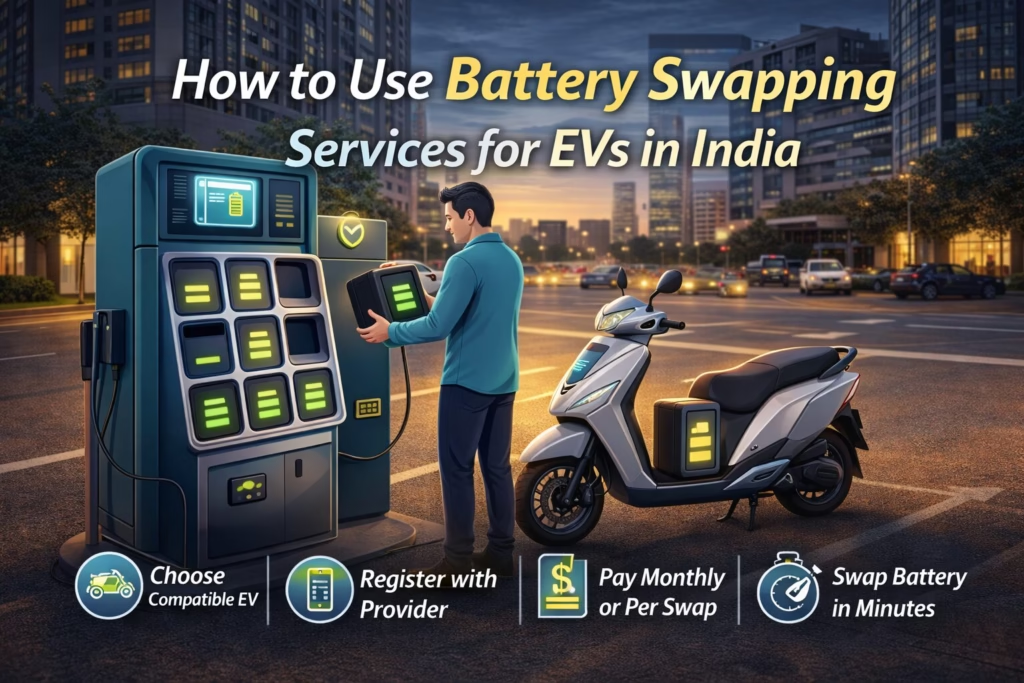
Battery swapping is emerging as a practical solution for electric vehicle users who want faster refuelling, predictable costs, and minimal downtime. Instead of waiting to charge a battery, drivers exchange a depleted battery for a fully charged one at a swap station. In India, this model fits well with dense cities, delivery fleets, and two and three wheeler usage where time and turnaround matter more than long range.
This guide explains how battery swapping works in India, who can use it, step by step usage, cost structure, benefits and limits, and what to check before choosing a swapping service.
Quick Answer
Battery swapping services in India allows EV users to replace an empty battery with a charged one in a few minutes at dedicated swap stations. It works best for electric two wheelers, three wheelers, and commercial fleets. Users subscribe to a plan or pay per swap, reducing upfront vehicle cost and eliminating long charging waits.
What Is Battery Swapping and How It Works
Battery swapping separates the battery from the vehicle purchase. The vehicle uses standardized, removable battery packs that operators manage and charge centrally.
The basic flow works like this:
- Drive to a battery swap station
- Authenticate through an app, RFID, or QR code
- Remove the depleted battery
- Insert a fully charged battery
- Confirm the swap and continue driving
The entire process usually takes two to five minutes, similar to refuelling a petrol vehicle.
Why Battery Swapping Makes Sense in India
India’s EV usage patterns strongly favor swapping in certain segments:
- High daily usage in delivery and ride services
- Limited private parking in cities
- Power supply constraints in older residential buildings
- Cost sensitivity among first time EV buyers
Battery swapping reduces dependency on home charging and shifts battery ownership and maintenance to the service provider.
Who Can Use Battery Swapping Services
Battery swapping currently suits specific EV categories:
Electric Two Wheelers
Scooters and bikes used for commuting, food delivery, and gig work form the largest user base.
Electric Three Wheelers
E rickshaws and cargo three wheelers benefit from fast turnaround during long operating hours.
Commercial Fleets
Delivery companies, courier services, and logistics operators use swapping to keep vehicles running throughout the day.
Most passenger electric cars do not support swapping yet due to battery size and standardization challenges.
Major Battery Swapping Operators in India
Several operators are building swap networks across Indian cities:
- SUN Mobility
Focuses on two and three wheelers and commercial fleets with modular batteries. - Gogoro
Known globally for scooter battery swapping and expanding partnerships in India. - Battery Smart
Operates a wide swap network for e rickshaws and cargo vehicles.
Each operator uses its own battery format and compatible vehicles.
Step by Step: How to Use Battery Swapping in India
Step 1: Choose a Compatible EV
Only vehicles designed for swapping can use the service. Confirm that the EV model supports the operator’s battery standard.
Step 2: Register With a Swapping Provider
Create an account through the provider’s app or partner platform. This includes identity verification and payment setup.
Step 3: Select a Subscription or Pay Per Swap
Most providers offer:
- Monthly subscription plans with fixed swaps
- Pay per swap pricing for flexible usage
Subscription plans usually suit high mileage users.
Step 4: Locate a Swap Station
Use the app to find the nearest operational station with charged batteries available.
Step 5: Perform the Swap
Authenticate at the station, remove the empty battery, insert the charged unit, and confirm through the app.
Step 6: Drive and Monitor Usage
The app tracks energy usage, battery health, and remaining subscription balance.
Cost Structure Explained
Battery swapping costs vary by city and provider, but the structure stays consistent:
Vehicle Purchase Cost
EVs with swapping support often cost less upfront since the battery is not included.
Subscription or Swap Fee
Users pay a monthly fee or per swap charge based on usage.
Maintenance Included
Battery degradation, replacement, and safety checks remain the provider’s responsibility.
For high usage vehicles, swapping often proves cheaper than fast charging over time.
Benefits of Battery Swapping
Minimal Downtime
Swapping takes minutes instead of hours, ideal for commercial operations.
Lower Upfront EV Cost
Removing the battery from the purchase reduces initial price.
No Battery Degradation Worry
Providers manage battery health, replacement, and lifecycle.
Scalable for Fleets
Centralized energy management improves operational planning.
Limitations to Understand
Limited Vehicle Compatibility
Only specific EV models support swapping today.
Network Availability
Swap stations remain concentrated in major cities.
Battery Standard Fragmentation
Each operator uses proprietary battery designs.
Less Control Over Battery Type
Users do not own or customize the battery.
Battery swapping works best when usage stays within the provider’s active coverage area.
Battery Swapping vs Fast Charging
| Factor | Battery Swapping | Fast Charging |
|---|---|---|
| Time | 2 to 5 minutes | 30 to 60 minutes |
| Battery Ownership | Provider owned | User owned |
| Upfront Cost | Lower | Higher |
| Best For | Fleets and delivery | Personal cars |
| Infrastructure | Compact stations | High power chargers |
Both systems can coexist, serving different mobility needs.
Safety and Battery Quality
Reputed providers monitor:
- Temperature and charging cycles
- Battery health and degradation
- Fault detection and isolation
Standardized safety protocols reduce fire risk and improve reliability compared to unmanaged home charging setups.
Future of Battery Swapping in India
Battery swapping growth depends on:
- Wider vehicle standardization
- Expansion into tier two cities
- Policy support and incentives
- Fleet driven adoption
Government guidelines already recognize swapping as a valid EV charging method, especially for commercial vehicles.
Passenger car swapping may emerge later if standardization improves.
FAQs
Can private EV owners use battery swapping
Yes, if the vehicle supports swapping and operates within network coverage.
Is battery swapping cheaper than charging
For high daily usage, swapping often costs less due to predictable pricing and reduced downtime.
Do users get the same battery every time
No. Batteries rotate within the network, but quality standards remain consistent.
Is battery swapping safe
Yes, when managed by certified operators with monitored charging systems.
Summary
Battery swapping offers a practical charging alternative for EV users in India, especially in two wheeler, three wheeler, and fleet segments. It reduces charging time, lowers upfront costs, and removes battery ownership concerns. While it does not suit every EV today, swapping plays a critical role in scaling electric mobility where fast turnaround and predictable costs matter most.
As networks expand and vehicle compatibility improves, battery swapping will remain a key pillar of India’s EV ecosystem alongside conventional charging solutions.