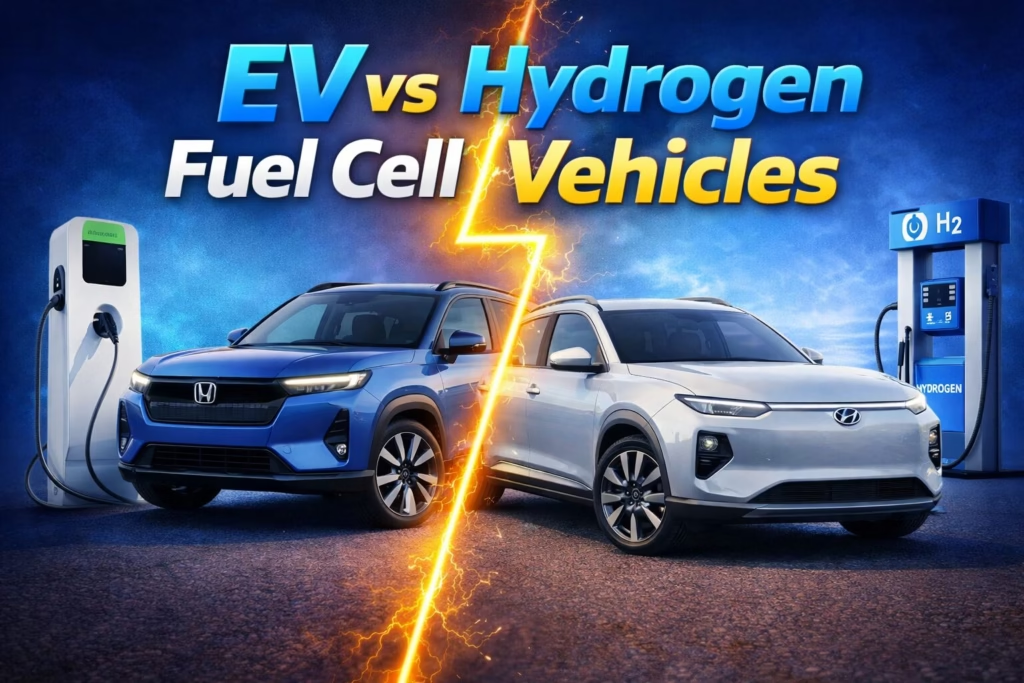
Alternative fuel vehicles are shaping the future of transportation. Two leading contenders are battery electric vehicles (EVs) and hydrogen fuel cell electric vehicles (FCEVs). Both aim to reduce reliance on fossil fuels and cut emissions, but they differ significantly in how they work, their benefits, and the challenges they face when compared side-by-side. In topics like hydrogen cars vs electric cars: which is more sustainable or hydrogen car vs electric car which is better, the answer often depends on context — such as fueling infrastructure, energy sources, and use case. This article breaks down hydrogen vs electric cars environmental impact, pros and cons, range and refueling statistics like hydrogen car mileage per kg, how hydrogen fuel cell cars work, and the key advantages and challenges of each.
How Hydrogen Fuel Cell Cars Work
A hydrogen fuel cell electric vehicle generates electricity onboard using a fuel cell that combines hydrogen with oxygen from the air. The basic steps are:
- Hydrogen storage: Hydrogen gas is stored in high-pressure tanks onboard the car.
- Fuel cell reaction: Hydrogen enters the fuel cell stack, where it reacts with oxygen through a proton exchange membrane (PEM).
- Electricity creation: This reaction produces electricity that powers the vehicle’s electric motor.
- Emissions: The only tailpipe byproduct is water vapor.
Unlike battery EVs that draw power from a large battery pack charged from the grid, FCEVs generate power from hydrogen as needed.
Hydrogen Cars vs Electric Cars: Sustainability and Environmental Impact
Tailpipe Emissions
Both EVs and hydrogen cars produce zero harmful tailpipe emissions — battery EVs emit no exhaust, and hydrogen fuel cells release only water vapor.
Life Cycle Environmental Impact
- EVs: Environmental impact depends on the electricity mix used to charge the battery. When renewable energy is used, emissions can be significantly lower than vehicles powered by fossil fuels.
- FCEVs: The sustainability of a hydrogen car’s life cycle depends heavily on how the hydrogen is produced. If hydrogen comes from fossil fuels like methane reforming, emissions can be high. If it’s made through renewable-powered electrolysis (“green hydrogen”), the lifecycle emissions fall dramatically.
Which is more sustainable? When hydrogen is made from renewables or nuclear power, fuel cell vehicles can be competitive with EVs in lifecycle emissions. However, many hydrogen production methods still rely on fossil fuels, which can offset environmental benefits.
Driving Range and Refueling
One key advantage of fuel cell vehicles is range and refueling speed:
- Hydrogen fuel cell cars often achieve longer range figures than many battery EVs with equivalent vehicle size. For example, hydrogen cars can exceed 350 miles on a single tank.
- Refueling time for hydrogen is roughly 3 to 5 minutes, similar to filling a petrol or diesel car.
- EVs typically take longer to recharge — even fast charging often requires 20–30 minutes for an 80% charge and several hours on regular chargers.
However, range and refueling advantages can vary based on model and technology improvements over time.
Hydrogen Car Mileage Per Kg
Hydrogen’s energy density by weight gives FCEVs a competitive advantage in range. For example, some fuel cell vehicles achieve 300+ miles per tank, with hydrogen weighing only a few kilograms.
This “mileage per kg” metric means that hydrogen cars can go farther with less fuel weight compared to heavy battery packs, which benefit energy-dense storage but add significant mass to the vehicle.
EV vs Hydrogen Fuel Cell Vehicles: Advantages
Advantages of Battery Electric Cars
- Higher energy efficiency: EVs convert more of the energy they receive into power at the wheels — often around 80% or more, compared with lower efficiencies for hydrogen systems.
- Charging infrastructure growth: A widely-expanding charging network exists in many countries now.
- Lower operating cost: Electricity from the grid is generally cheaper than hydrogen fuel.
- Lower purchase cost: EVs tend to be cheaper to buy than equivalent hydrogen fuel cell vehicles.
- Mature technology: The EV ecosystem, from manufacturing to user familiarity, is more developed.
Advantages of Hydrogen Fuel Cell Vehicles
- Fast refueling: Hydrogen cars are refueled almost as quickly as conventional cars.
- Longer range potential: FCEVs can achieve longer travel distances before refueling.
- Reduced dependency on heavy batteries: Fuel cells can reduce the need for large, heavy battery packs, lowering vehicle weight.
- Cold weather resilience: Hydrogen systems are less impacted by low temperatures than batteries.
EV vs Hydrogen Fuel Cell Vehicles: Challenges
Challenges for Battery EVs
- Charging time: Even fast chargers take longer than a traditional refueling stop.
- Battery degradation: Batteries lose capacity over many cycles, which can impact range over time.
- Charging infrastructure gaps in rural or developing regions.
Challenges for Hydrogen Fuel Cell Vehicles
- Hydrogen production: Most hydrogen today is produced from fossil fuels, which reduces environmental benefit.
- Infrastructure scarcity: Hydrogen refueling stations are rare, limiting practicality in many regions.
- Cost: Fuel cell systems and hydrogen fuel remain more expensive than EV systems and electricity.
- Storage and distribution: Hydrogen must be stored at high pressure or low temperature, which adds complexity.
These infrastructure and cost barriers currently limit the widespread adoption of hydrogen cars compared with electric vehicles.
Hydrogen vs Electric Cars: Pros and Cons
| Feature | Battery EV | Hydrogen Fuel Cell Vehicle |
|---|---|---|
| Tailpipe emissions | Zero | Zero |
| Refueling/Charging time | Longer | Short |
| Range | Moderate to high | High |
| Fueling infrastructure | Growing rapidly | Very limited |
| Energy efficiency | High | Lower overall |
| Cost | More affordable | Expensive |
| Environmental impact | Dependent on electricity source | Dependent on hydrogen source |
This table highlights that while both alternatives outperform internal combustion engines in emissions, they each have distinct strengths and limitations.
FAQs
Which is more sustainable: hydrogen cars or electric cars?
Both have potential to be sustainable. EVs often have lower lifecycle emissions if powered by renewable electricity. FCEVs can be sustainable when hydrogen production is powered by renewables rather than fossil fuels.
What are the pros and cons of hydrogen vs electric cars?
Electric cars offer higher efficiency, broader infrastructure, and lower cost, while hydrogen cars deliver faster refueling and longer range but lack fueling networks and currently have higher cost and lifecycle emissions depending on hydrogen production.
Conclusion
When comparing hydrogen cars vs electric cars, each technology presents compelling advantages and significant challenges. Battery electric vehicles are generally more efficient, more affordable, and supported by a rapidly expanding charging infrastructure. Hydrogen fuel cell vehicles, while providing fast refueling and longer range, struggle with supply chains, infrastructure scarcity, and cost hurdles. The environmental impact of both depends largely on how the electricity or hydrogen fuel is produced. As energy systems evolve with more renewables and scalable infrastructure, both technologies might play complementary roles in a low-carbon transportation future.