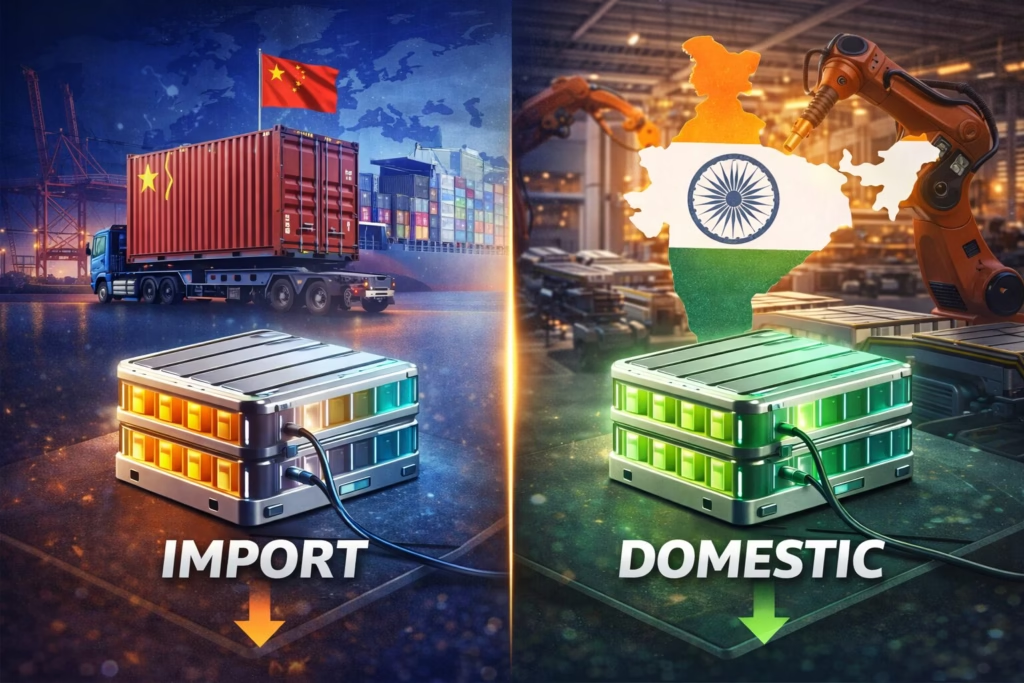
The shift toward electric mobility in India depends heavily on the electric vehicle battery ecosystem—especially on whether the country can reduce reliance on imported battery cells and build strong domestic manufacturing capacity. This article examines the current state of India EV battery imports versus domestic production, key players such as EV battery startups in India and listed companies, structural supply chain challenges, opportunities, and initiatives aimed at making India self-reliant in EV batteries.
Understanding the balance of imports and domestic production is vital for policymakers, investors, and EV makers. EV batteries often account for a large share of an EV’s final cost. Reducing imports through home-grown cell manufacturing can help cut vehicle costs, create jobs, and secure supply chains against global shocks.
How Much of India’s EV Battery Needs Are Imported?
India currently relies predominantly on imported lithium-ion battery cells, the core component of EV packs. Most of these cells come from China, Japan, and South Korea, making up the bulk of the cost of EV batteries. This supply chain dependency means that:
- Domestic production meets only about 20% of total lithium-ion demand, with the rest imported.
- Imports of EV battery cells were valued at around $3 billion in FY25, up from $1.8 billion in FY22.
Because battery cells drive so much of the cost and technology, this reliance exposes India to price volatility, foreign exchange risk, and geopolitical uncertainties.
Why Is India Import-Heavy in EV Batteries?
Several structural reasons keep India dependent on imports:
Lack of Raw Materials
India does not have significant reserves of lithium, cobalt, or nickel—critical for most lithium-ion chemistries. Without local mining and refining, India must import these inputs.
Nascent Manufacturing Capabilities
While pack assembly occurs in India, the production of battery cells remains limited. Even with government support, most cell production is still outsourced.
Technology and R&D Challenges
Advanced cell manufacturing requires technical skill, scale, and long-term investment. Indian companies often lack the capital intensity and R&D budgets of established global suppliers.
Domestic Battery Manufacturers and Startups in India
India has begun building domestic capability through both established players and newer innovators. Here are some of the key battery manufacturers and startups working to build India’s EV battery ecosystem:
EV Battery Startups in India
- Log 9 Materials – Developed indigenous lithium-ion and alternative battery chemistries and operates a cell facility in Bengaluru.
- PUR Energy Limited / PURE EV – A Hyderabad-based startup producing electric vehicles and lithium storage batteries.
These ventures show early progress toward reducing import dependency while supplying to domestic EV makers.
EV Battery Listed Companies in India
Indian stock markets include several companies involved in battery and energy storage sectors. While not pure EV battery producers, these companies contribute to the broader battery value chain:
- Amara Raja Batteries Ltd. – Known for Amaron brand and expanding into lithium-ion segments.
- Exide Industries – Battery maker working on lithium projects and energy storage systems.
- Other firms, such as Tata Power-DDL and JSW, are investing in battery manufacturing or planning capacity expansion.
These companies provide industry credibility to India’s EV battery ambitions.
Domestic Production Targets and Progress
India has set ambitious goals for localizing battery production:
- Under government incentive schemes like Production-Linked Incentives (PLI), India aims to establish 50 GWh of domestic cell capacity by 2026, with states offering additional support.
- Battery pack manufacturing is growing rapidly, with the market forecast to reach around $4 billion by 2029, reflecting greater local assembly activity.
These investments increase the share of domestically made components in EV batteries and start to shift the landscape away from full dependence on imports.
Supply Chain Barriers
Despite progress, some bottlenecks remain:
Critical Material Dependency
India depends on imported raw materials and precursor chemicals essential for lithium-ion cells. This keeps domestic production expensive and vulnerable.
Technology Gaps
India needs more advanced manufacturing processes and automation to compete with global leaders like China, which currently control around 70% of global production.
Workforce and R&D
There is limited industrial R&D on advanced batteries and insufficient skilled labor in cell fabrication facilities.
Solutions to Build Domestic EV Battery Capacity
India’s pathway to REDUCE imports and BOOST domestic output includes several strategic approaches:
1. Unlocking Domestic Supply Chains
Focusing on processing raw materials locally or through partnerships can reduce dependency. Some states and companies are exploring mining lithium reserves domestically.
2. Government Incentives
PLI schemes and subsidies are driving investment into gigafactories and processing units, making local manufacturing more competitive internationally.
3. Public-Private Partnerships
Strategic collaborations with global cell producers can bring both capital and technology expertise into India’s ecosystem.
4. Recycling and Second Life Markets
Battery recycling plants could recover materials from end-of-life batteries, shrinking the need for raw material imports and creating circularity.
Impact of Localization on India’s EV Market
A more robust domestic EV battery sector would:
- Lower costs for EV manufacturers and consumers
- Improve price stability by reducing exposure to foreign currency fluctuations
- Generate high-value manufacturing jobs
- Strengthen India’s global competitiveness in clean mobility solutions
All these benefits support India’s broader goals for electrification and sustainability.
EV Battery NewsIndia Trends to Watch
Recent industry moves show emerging shifts:
- IFC invested $50 million in Gujarat Fluorochemicals Ltd to build integrated battery-materials capacity, signaling international interest in India’s supply chain development.
- Many companies, including Maxvolt Energy, are expanding production and recycling capacity to meet growing EV demand.
These developments support the gradual expansion of indigenous battery capabilities.
FAQs
What percentage of EV battery production is local in India?
Current estimates suggest domestic battery cell production accounts for roughly 10% to 20% of total battery pack value, with the rest made from imported cells and materials.
Who are major EV Lithium battery manufacturers in India?
Major manufacturers include Amara Raja Batteries, Exide Industries, and expanding players like Log9 Materials and Maxvolt Energy.
What is a comprehensive analysis of India’s electric vehicle battery supply chain barriers and solutions?
Academic and industry analyses highlight obstacles such as raw material dependency, supply complexity, and technology gaps, alongside solutions like domestic processing, policy support, and innovation investment.
Conclusion
India’s journey toward an integrated and self-sufficient EV battery ecosystem is underway but still at an early stage. Heavy reliance on imported cells and raw materials has kept costs high and made the supply chain vulnerable. However, government initiatives, growing local firms including EV battery startups in India, and larger battery manufacturers in India are creating momentum. With ongoing policy support and investment, India can reduce import dependency and build stronger domestic capabilities, supporting broader EV adoption and industrial growth.