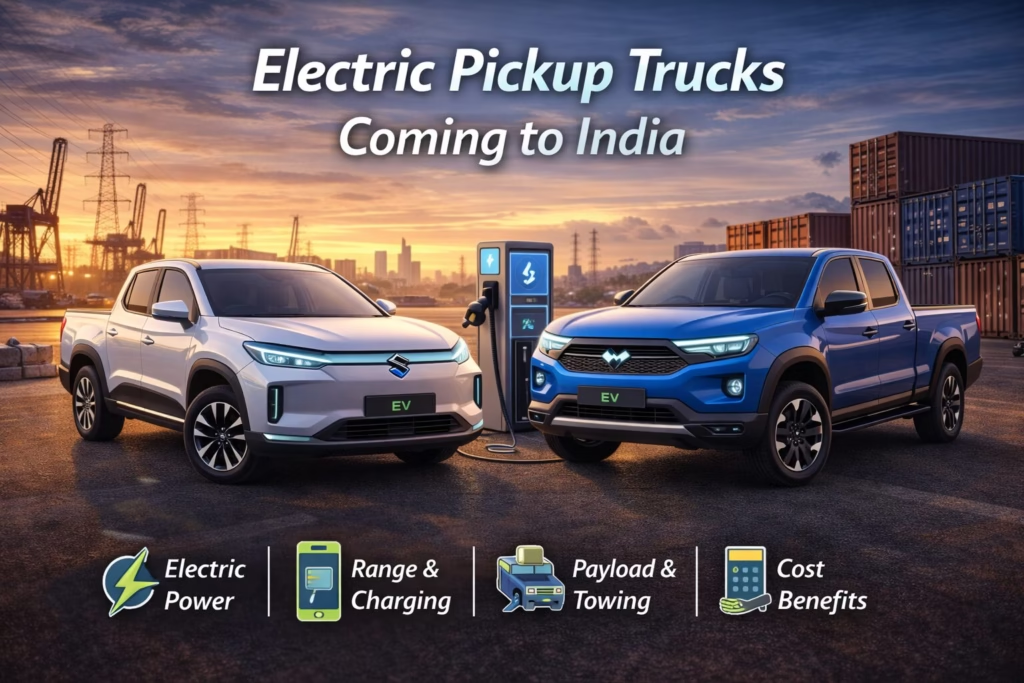
Electric pickup trucks are poised to transform the Indian automotive landscape in the coming years. As infrastructure improves and businesses seek cleaner haulage solutions, 2026 looks set to be a breakout year for electric pickups — vehicles that blend rugged utility with zero-emission driving. Unlike traditional EVs focused on city commuting, electric pickups bring work-ready performance, cheaper total cost of ownership, and new use-cases in commercial fleets and rural transport.
This deep-dive article explains what models are expected, key specs buyers should watch for, commercial and consumer use-cases, charging and infrastructure implications, total ownership costs, and how India’s market will shape this segment.
Quick Answer — What to Expect
In 2026, India should see multiple electric pickup truck launches featuring:
- Competitive range figures suitable for urban and highway use
- Significant torque and payload capabilities
- Strong charging support and battery tech
- Fleet-forward and consumer-friendly variants
- Lower operating costs than diesel pickups
These trucks could unlock new opportunities for small businesses, logistics providers, and mobility fleets while opening a fresh consumer category beyond SUVs and hatchbacks.
Why Electric Pickups Matter for India
Electric pickup trucks have several strong use-cases in India:
- Delivery and logistics fleets — urban parcel delivery, cold chain support, and first/last-mile haulage
- Rural and construction sectors — rugged terrain capability with low running cost
- Corporate and service fleets — maintenance teams, utility services, and field operations
- Consumer lifestyle buyers — outdoor adventure, towing, and weekend utility
Unlike passenger EVs that focus on range and tech, pickups also emphasize load capacity, towing, and durability — areas where electrification can cut costs substantially over time.
Upcoming Electric Pickup Trucks in India (2026)
1. Tata Curvv EV Pickup Variant (Expected)
- Positioning: Compact urban pickup with SUV-like design cues
- Why it matters: Based on Tata’s scalable EV platform; potential excellence in city logistics delivery
- Expected features: Front wheel drive, competitive battery sizes, strong safety systems
Tata’s electric ecosystem puts it in a strong spot to introduce a pickup derivative built on its existing Curvv architecture.
2. Mahindra Electric Pickup (Upcoming)
- Positioning: Rugged work-ready electric pickup with robust load capacity
- Why it matters: Mahindra leads utility vehicles in India and has strong experience with electric commercial vehicles
- Expected features: Enhanced torque, off-road handling, and removable battery configurations
Mahindra’s strong dealer and service network could accelerate adoption among commercial buyers.
3. Hyundai & Kia Pickup Concepts (Global-to-India Potential)
- Positioning: Premium electric pickups with advanced safety and comfort
- Why it matters: Hyundai and Kia have global electric pickup concepts; an India launch could elevate expectations
- Expected features: Large infotainment, active safety suite, and modular utility bed
Brand credibility may attract urban buyers who want a pickup without compromising premium comfort.
4. International Brands (Ford/Rivian/Tesla Trucks)
While a formal India launch date is not yet confirmed, global electric pickup leaders (like Rivian, Ford F-150 Lightning, and Tesla Cybertruck) influence the segment and may enter India via CBU (Completely Built Up) imports or local assembly.
Expected impacts:
- Higher initial price points
- Premium feature sets
- Strong public and fleet interest from corporates
Expected Specs & Benchmark Targets
While official specs will vary by model and variant, the 2026 crop of electric pickup trucks in India is expected to target the following categories:
| Specification | Expected Target |
|---|---|
| Battery Size | 70–120 kWh |
| Real-World Range | ~350–500 km+ |
| Charging Support | 150–250 kW DC Fast Charging |
| Torque | 500–1200 Nm |
| Payload | 800–1200 kg |
| Towing Capacity | 1.5–3 tons (segment dependent) |
These figures position electric pickups as truly usable alternatives to current diesel pickups while providing the benefits of electrification such as instant torque and lower running cost.
Who Benefits Most?
Commercial & Logistics Operators
Electric pickup trucks can drastically reduce fuel consumption costs. A logistics operator running 100 km a day can save on energy bills compared to diesel, where diesel costs per km fluctuate but remain significantly higher.
- Lower per-km energy cost (electricity vs diesel)
- Predictable maintenance schedules
- Less downtime for servicing
Small Businesses and Tradespeople
Pickup use for small businesses includes transporting tools, equipment, and goods. Electric alternatives offer:
- Lower noise levels
- Reduced vibration and smoother driving
- Easier access to urban centers with emission restrictions
Adventure & Personal Use Buyers
An emerging trend is pickups used beyond work — camping, outdoor sports, and lifestyle usage. Electric pickups can support:
- Battery-to-load (V2L) power for accessories
- Silent operation in nature areas
- Custom utility bed accessories
Charging Infrastructure and Practicality
Charging infrastructure is a key determinant of electric pickup adoption. For India in 2026, expect:
- Growth of public DC fast charger networks on highways
- Depot/enterprise chargers at fleet/pickup hubs
- Home charging support for personal owners
Real-world planning: Most fleet operators will favour overnight depot charging supplemented by selective fast charger access, reducing dependency on public charger density.
Total Cost of Ownership — Why Electric Pickups Save Money
Electric pickup trucks save costs in multiple ways:
1. Fuel/Energy Savings
Electricity cost per km tends to be significantly lower than diesel per km, particularly for predictable daily usage.
2. Reduced Maintenance
EVs have fewer moving parts than internal combustion engines, resulting in:
- Lower brake wear thanks to regenerative braking
- No oil changes or complex transmission servicing
3. Tax & Incentives
State incentives, road tax exemptions, and fleet purchase subsidies (where applicable) further improve the economics.
4. Resale Value Potential
With rising EV acceptance, second-hand demand for electric pickups in fleet and personal markets may strengthen over time.
Challenges on the Horizon
Despite the promise, a few challenges need attention:
- Infrastructure gaps in remote regions — fast chargers must scale for pickup fleet operators.
- Payload & range balance — heavier loads naturally reduce range.
- Initial pricing — electric pickups may start pricier than diesel equivalents before incentives.
Many of these challenges are expected to ease as scale improves and newer battery chemistries lower costs.
Safety, Tech & Features to Expect
2026 electric pickup trucks will likely include:
- Advanced Driver Assistance Systems (ADAS)
- Infotainment with seamless navigation and fleet telematics
- Over-the-air updates for continuous improvements
- Battery thermal management for heat/cold weather reliability
- Connectivity and fleet tracking systems for commercial use
These tech features elevate not just comfort but real world driving safety and operational visibility.
Pros and Cons — Electric Pickup Segment
Pros
- Lower running costs than diesel pickups
- Strong torque and load handling
- Quiet and smooth operation
- Lower maintenance burden
- Better air quality and emissions profile
Cons
- Higher upfront cost initially for fleet buyers
- Charging infrastructure in non-urban corridors still growing
- Payload and range trade-offs with heavier use
FAQs — Electric Pickups in India (2026)
Will electric pickups replace diesel pickups in India?
Not immediately, but they will significantly capture commercial delivery and urban fleet segments by 2028.
What range should I expect?
Real-world range of 350–500 km is achievable depending on battery size and load.
Can electric pickups tow?
Yes — expected towing capacities of 1.5–3 tons put many models on par with diesel counterparts.
Is home charging enough?
For personal use pickups with routine daily range under ~200 km, home charging suffices. Fleet use will still need depot charging solutions.
Summary
The electric pickup truck segment in India is arriving in 2026 with strong potential to disrupt traditional work and utility vehicles. Models like Tata’s future pickup EV, Mahindra’s rugged entrant, and possible entries from Hyundai/Kia and global brands will bring:
- Practical electric ranges
- Lower running costs
- Fleet and commercial suitability
- Consumer appeal for utility and lifestyle
While infrastructure and pricing remain challenges, pickups poised for launch in 2026 have the fundamentals to define India’s next chapter in electric mobility — one where trucks and work vehicles embrace electrification alongside passenger EVs.