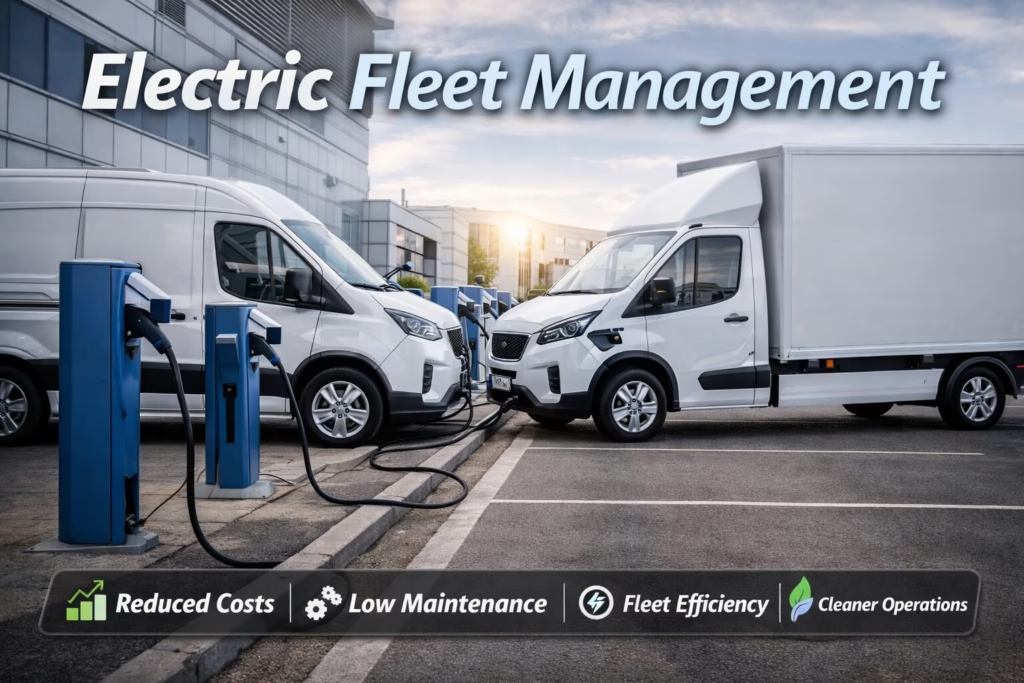
Electric fleet management has moved from experimentation to execution across India. Businesses that operate delivery vehicles, employee transport, service vans, and last-mile logistics now treat electric fleets as a strategic cost decision rather than a sustainability add-on. Rising fuel prices, predictable electricity costs, and policy support have made electric fleets financially attractive, especially for operations with fixed routes and high daily usage.
This article explains what electric fleet management means, where the real cost savings come from, and how businesses reduce operating expenses over time by switching from internal combustion engine fleets to electric ones.
Quick Answer
Electric fleet management lowers total operating costs by reducing fuel expenses, maintenance spending, downtime, and tax burdens. Businesses typically save 40–60 percent on energy costs and 30–50 percent on maintenance costs over the vehicle lifecycle, especially in high-utilization fleet operations.
What Is Electric Fleet Management?
Electric fleet management refers to the operation, monitoring, and maintenance of a group of electric vehicles used for business purposes. This includes:
- Delivery fleets
- Corporate employee transport
- Ride-hailing vehicles
- Service and utility vehicles
- Public transport and institutional fleets
Unlike conventional fleets, electric fleets rely heavily on data, charging planning, and usage patterns to control costs and vehicle health.
Why Businesses Are Switching to Electric Fleets
Fleet operators focus on numbers, not trends. Electric vehicles fit this mindset because they offer predictable costs and lower mechanical complexity.
Key drivers behind adoption include:
- Volatile diesel and petrol prices
- Lower electricity cost per kilometer
- Fewer mechanical failures
- Policy incentives and tax relief
- Urban emission and access restrictions
For fleets that run fixed routes or return to base daily, electric vehicles deliver measurable financial results.
Energy Cost Savings Explained
Electricity vs Fuel Cost Per Kilometer
One of the largest cost advantages comes from energy pricing.
Typical operating cost comparison:
- Diesel vehicle: ₹7–10 per km
- Electric vehicle: ₹1–2 per km
For a fleet vehicle running 120 km daily, annual fuel savings alone can exceed ₹2 lakh per vehicle, depending on region and tariff.
According to the Bureau of Energy Efficiency, electricity remains significantly cheaper per unit of usable transport energy than fossil fuels
https://beeindia.gov.in
Maintenance Cost Reduction
Fewer Moving Parts
Electric vehicles do not require:
- Engine oil changes
- Gearbox servicing
- Exhaust system maintenance
- Fuel injectors or filters
This reduces scheduled service frequency and workshop downtime.
Brake Wear Reduction
Regenerative braking reduces brake pad and disc wear. Many fleet operators report brake replacements occurring at double the interval compared to diesel vehicles.
The U.S. Department of Energy confirms that EV maintenance costs are substantially lower due to reduced mechanical complexity
https://www.energy.gov/eere/vehicles
Lower Downtime and Higher Vehicle Availability
Fleet profitability depends on vehicle uptime. Electric vehicles spend less time in workshops because:
- Fewer mechanical failures occur
- Predictive diagnostics flag issues early
- Software alerts help schedule maintenance proactively
Higher uptime translates directly into more deliveries completed or more service calls per day.
Charging Strategy as a Cost Tool
Depot Charging Advantage
Businesses that install depot chargers gain full control over charging cost and schedule.
Benefits include:
- Off-peak electricity usage
- Predictable daily charging cycles
- Reduced dependence on public chargers
This structure suits logistics hubs, warehouses, and company campuses.
Public Charging as Backup
Public fast charging serves as a contingency tool rather than a primary solution. Smart routing minimizes high-cost charging events.
The Ministry of Power outlines national guidelines for public charging infrastructure development
https://powermin.gov.in
Fleet Telematics and Data Savings
Real-Time Monitoring
Electric fleets generate detailed data on:
- Energy consumption per route
- Driver behavior
- Charging efficiency
- Battery health trends
Managers use this data to reduce waste and improve routing decisions.
Driver Behavior Control
Smooth driving increases EV efficiency. Telematics systems identify harsh acceleration, excessive idling, and inefficient routing, reducing energy use across the fleet.
Battery Life and Asset Planning
Predictable Degradation
Modern EV batteries degrade gradually and predictably. Fleet managers plan asset life based on usage cycles rather than mileage alone.
Typical fleet battery usage retains 70–80 percent capacity after several years, depending on charging behavior.
The International Energy Agency highlights improved battery longevity in commercial EV applications
https://www.iea.org
Tax and Policy Benefits
Reduced Tax Burden
Many regions provide:
- Road tax exemptions
- Registration fee waivers
- Lower permit charges
These savings directly reduce upfront fleet acquisition costs.
Depreciation and Accounting Advantages
Electric fleet vehicles may qualify for accelerated depreciation or capital allowances, improving cash flow in asset-heavy businesses.
Electric Fleets and Total Cost of Ownership
Higher Purchase Price Offset
Electric vehicles often cost more upfront. However, total cost of ownership favors EVs when:
- Daily usage exceeds 80–100 km
- Vehicles operate five or more days per week
- Charging occurs primarily at owned facilities
In such cases, payback periods often fall between 18 and 36 months.
Operational Use Cases That Benefit Most
Electric fleet management delivers the strongest financial outcomes in:
- Last-mile delivery operations
- E-commerce logistics
- Urban service fleets
- Corporate employee transport
- Municipal and institutional transport
Fixed routes and predictable schedules amplify cost savings.
Challenges Businesses Must Plan For
Electric fleets require planning discipline. Common challenges include:
- Initial charging infrastructure investment
- Route planning during early adoption
- Driver training for energy-efficient driving
- Grid capacity coordination at depots
Most of these challenges reduce after the first operational year.
FAQs
Is electric fleet management suitable for small businesses?
Yes. Small fleets with predictable routes often see faster payback due to high daily usage and controlled charging.
Do electric fleets work for long-distance logistics?
They work best for short to medium routes. Long-distance operations depend on charging availability and turnaround time.
How long do EV fleet batteries last?
With managed charging, batteries typically last several years while retaining usable capacity.
Are charging costs predictable?
Yes. Electricity tariffs remain more stable than fuel prices, supporting long-term budgeting.
Summary
Electric fleet management delivers measurable cost savings for businesses that operate vehicles daily. Lower energy costs, reduced maintenance, higher uptime, and supportive policies shift the economics strongly in favor of electric fleets. While upfront planning and charging setup require investment, operational savings accumulate quickly in high-usage scenarios.
As charging networks expand and vehicle options grow, electric fleets are becoming a practical financial decision rather than a future concept. For businesses focused on efficiency, reliability, and long-term cost control, electric fleet management now stands as a proven operational model rather than an experiment.