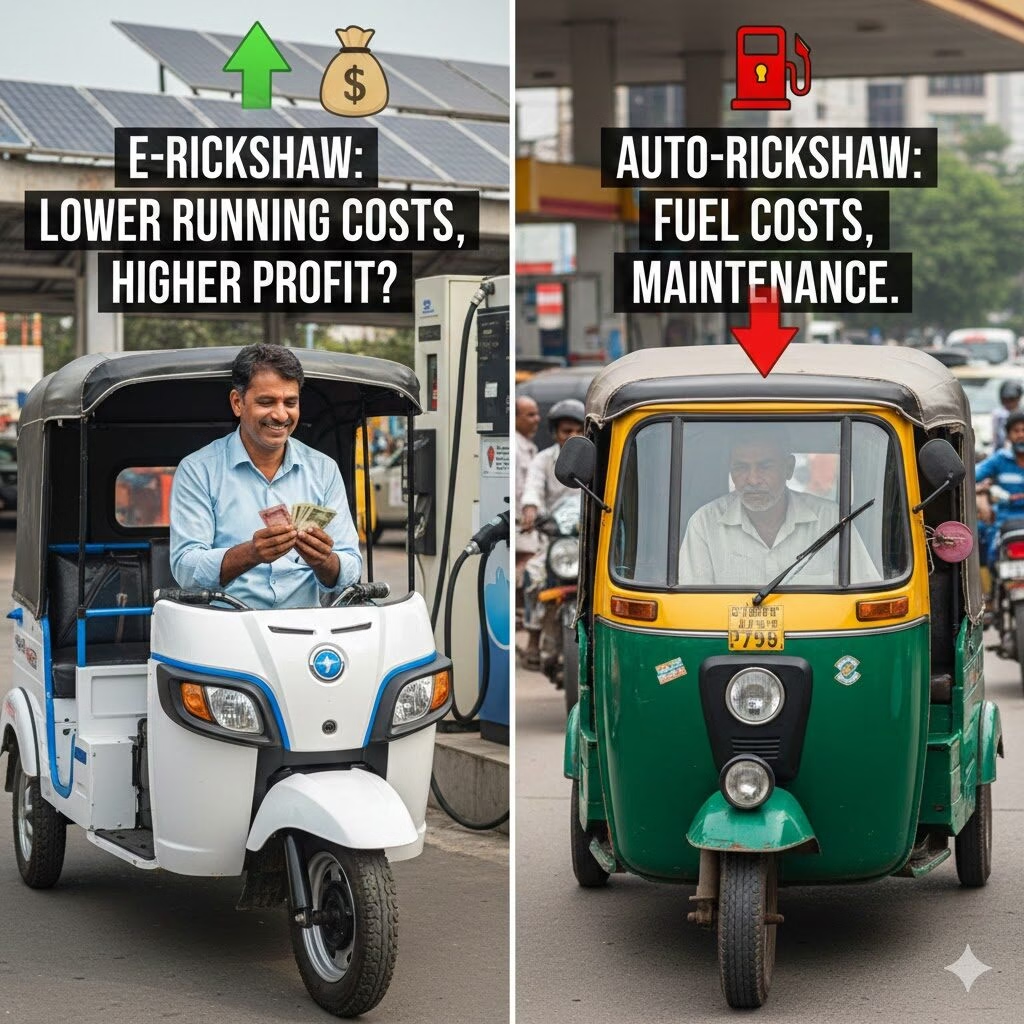
On the bustling streets of Delhi, Kolkata, and countless Indian towns, a quiet revolution is rolling. The familiar sputter of the petrol auto rickshaw is increasingly being replaced by the silent hum of the electric three-wheeler. For drivers and fleet owners, this isn’t just about going green—it’s a serious financial calculation. Are electric three-wheelers (e-rickshaws) more profitable than auto rickshaws now?
The short answer is a resounding yes, but the devil is in the daily details. This analysis goes beyond hype to compare hard numbers on cost, profit, and business models, helping you decide where to put your money.
The Head-to-Head: Cost of Ownership & Daily Running
Let’s break down the economics for a driver who owns or rents their vehicle, using 2025 figures for an 8-10 hour shift in a metro city.
1. The Daily Running Cost (The Heart of Profitability)
| Cost Component | Petrol Auto Rickshaw | Electric E-Rickshaw | Winner & Notes |
| “Fuel” Cost | ₹400 – ₹500 (Petrol: ~₹105/l, 40-50 km/l) | ₹80 – ₹120 (Electricity: ~₹8/kWh, 1.2-1.5 km/kWh) | E-Rickshaw saves ₹300+ daily. The single biggest advantage. |
| Daily Maintenance | ₹50 – ₹100 (Oil, spark plugs, frequent servicing) | ₹10 – ₹25 (Brakes, tyres, occasional bearing check) | E-Rickshaw. Far fewer moving parts. |
| Total Daily Running Cost | ₹450 – ₹600 | ₹90 – ₹145 | E-Rickshaw is 70-80% cheaper to run. |
The Math is Clear: An e-rickshaw driver saves a minimum of ₹300 per day on running costs alone. Over a 25-day month, that’s ₹7,500 more in the driver’s pocket before any other factors.
2. The Upfront & Financing Hurdle
This is where petrol autos traditionally had an edge, but the gap is closing.
| Factor | Petrol Auto Rickshaw | Electric E-Rickshaw | Insight |
| Ex-showroom Price | ₹2.5 – ₹3 Lakh | ₹2.8 – ₹3.5 Lakh (with Li-ion battery) | E-rickshaw costs ~₹50k more. |
| Loan Availability | Easier, established. | Improving rapidly with NBFCs & OEM financing. | |
| Subsidies & Incentives | None. | FAME-II & State Subsidies can reduce cost by ₹30,000-₹50,000. | Key advantage for EVs. |
Verdict: The higher sticker price of an e-rickshaw is a barrier, but subsidies and massive fuel savings help recover this cost quickly—often within 8-12 months.
The Rental Model: Electric Auto Rickshaw Rent Per Day
Many drivers don’t own; they rent. Here’s how the numbers stack up:
- Petrol Auto Rent: ₹500 – ₹700 per day. Driver bears full fuel cost. Total daily outlay: ₹900 – ₹1,200 (Rent + Petrol).
- Electric Auto Rickshaw Rent Per Day: ₹400 – ₹600 per day. Driver often bears charging cost. Total daily outlay: ₹480 – ₹720 (Rent + Charge).
Bottom Line: Renting an e-rickshaw can be ₹300-₹500 cheaper per day, significantly boosting the driver’s take-home income. This is fueling the rise of dedicated e-rickshaw rental hubs in cities.
E Rickshaw Business Ideas: Beyond Just Driving
The profitability extends from drivers to entrepreneurs. Here are proven e rickshaw business ideas:
- E-Rickshaw Fleet Ownership: Own 5-10 e-rickshaws, rent them out to drivers. With lower maintenance, your vehicles are on the road more, earning more.
- Battery Swapping Station: Set up a station where drivers swap depleted batteries for charged ones in 2 minutes, eliminating charging downtime. This is a high-growth model.
- Charging Hub with Amenities: Install multiple slow/fast chargers at a strategic location (e.g., an auto stand). Offer drivers a waiting area with tea, snacks, and phone charging for a fee.
- Last-Mile Logistics Fleet: Use e-rickshaws for parcel and e-commerce delivery in dense urban areas—a rapidly expanding sector.
The Other Side: Challenges & Considerations
E-rickshaws aren’t perfect. Consider these factors:
- Range & Downtime: Need charging for 6-8 hours daily. Swapping solves this but adds cost.
- Initial Speed: Lower top speed than petrol autos (max 40-45 km/h vs 60-70 km/h), which can affect long-haul trips.
- Load Capacity: Similar passenger capacity, but weight of batteries can slightly reduce hill-climbing ability.
Case Study: A Driver’s Shift in Delhi
Rajesh, a driver in East Delhi, switched from a rented petrol auto to a financed e-rickshaw in 2023.
- Before: Daily rent ₹600 + petrol ₹450 = ₹1,050 outlay. Daily earnings: ₹1,800. Net Daily Income: ₹750.
- After: Loan EMI ₹350 (after subsidy) + charging ₹100 = ₹450 outlay. Daily earnings: ₹1,700 (slightly fewer trips due to speed). Net Daily Income: ₹1,250.
- Result: Rajesh’s daily income increased by ₹500 (66%). He pays off his loan and will own the asset in 3 years.
Key Takeaways & Final Verdict
- Higher Daily Profit: E-rickshaws offer significantly higher daily take-home income for drivers due to drastically lower “fuel” and maintenance costs.
- Faster ROI: The higher upfront cost is offset by savings, with break-even typically within a year. Subsidies accelerate this.
- Business Scalability: For entrepreneurs, the e rickshaw business ideas around charging, swapping, and fleets are viable and growing.
- Future-Proof: With rising petrol prices and stricter city pollution norms, electric is the inevitable future of last-mile transport.
Conclusion: For a driver focused on maximizing daily earnings or an entrepreneur looking at the future of urban transport, electric three-wheelers are now decisively more profitable than traditional auto rickshaws. The economics have tipped. The transition isn’t just about cleaner air; it’s about smarter, more sustainable income. The numbers don’t lie—the future on three wheels is electric.
Frequently Asked Questions (FAQs)
Q1: How much can an e-rickshaw driver earn in a day?
A driver in a good location (metro city, near metro stations/markets) can earn ₹1,500 – ₹2,200 in fares per 8-hour shift. After deducting rent (₹400-₹600) and charging costs (₹80-₹120), the net daily income typically ranges from ₹900 to ₹1,600.
Q2: Is the government subsidy reliable for buying an e-rickshaw?
Yes, the FAME-II subsidy is well-established for three-wheelers. It is directly passed on to you by the manufacturer at the time of purchase, reducing the ex-showroom price. Always buy from an authorized dealer to ensure you get the subsidy.
Q3: What is the lifespan of an e-rickshaw battery, and what is the replacement cost?
A Lithium-ion (Li-ion) battery lasts 4-5 years or about 1,500 charge cycles. A replacement costs ₹40,000 – ₹60,000. The older Lead-acid batteries last 1-1.5 years and cost ₹15,000-₹20,000 to replace. Always opt for Li-ion for long-term business.
Q4: Can I use a normal home socket to charge an e-rickshaw?
Yes. Most e-rickshaws come with a charger that plugs into a standard 15A home socket. A full charge from empty takes 7-9 hours, ideal for overnight charging.
Q5: Are there any hidden costs in running an e-rickshaw?
The main hidden cost is downtime for charging during the day if you haven’t planned for it (which means lost income). Investing in a second battery or using a battery swapping service can mitigate this. Also, insure your vehicle and battery specifically against theft.