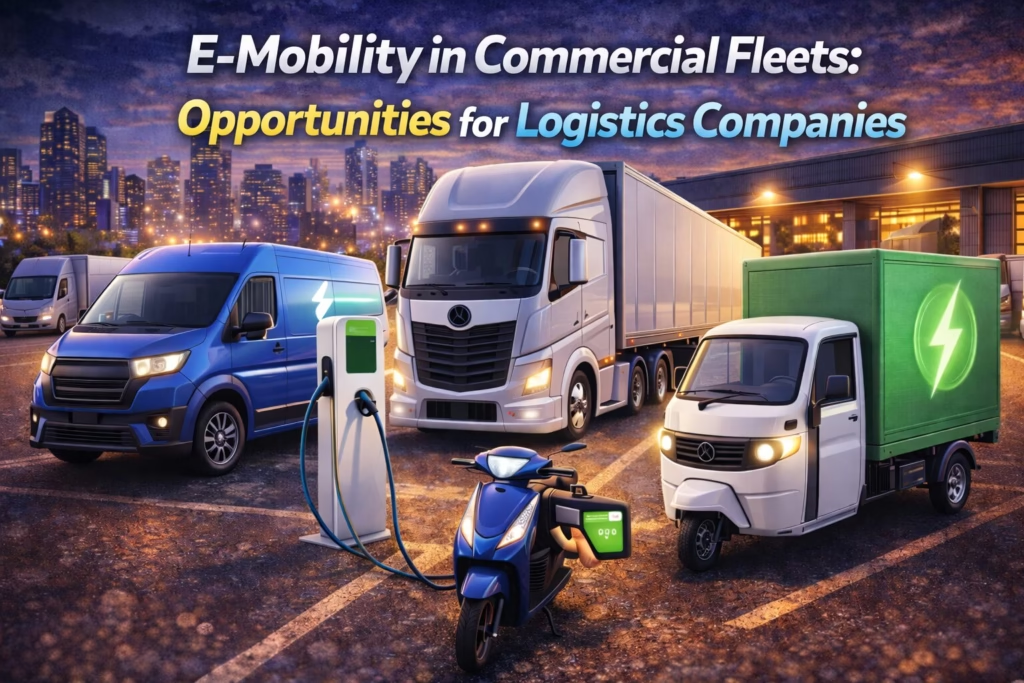
Electric vehicles are reshaping transportation in India, not just for private users but crucially for commercial fleets and logistics companies. From last-mile delivery bikes to heavy-duty trucks, fleet electrification promises reductions in operating costs, emissions, and dependence on fossil fuels — key priorities amid India’s sustainability commitments and ambitious EV targets. Understanding the opportunities for logistics companies, including cost benefits, charging and deployment strategies, evolving business models, and the broader EV scenario in India, helps stakeholders unlock the value in electrifying commercial operations.
What Is Driving E Mobility in Commercial Fleets in India?
Commercial fleet electrification in India is gaining momentum because of:
- Government policy support and incentives that promote EV adoption. India’s national EV strategy aims for a significant share of electric vehicle adoption by 2030, backed by policy frameworks like the FAME schemes and the NITI Aayog’s roadmaps. India’s EV sales jumped from 50,000 in 2016 to about 2.08 million in 2024, though penetration is still around 7.66% of total vehicle sales compared to global EV penetration of 16.48%.
- Cost advantages of electric vehicles in logistics: management consultants report electric vehicles can offer 15–20% lower total cost of ownership compared with diesel counterparts in logistics operations.
- Corporate sustainability goals as companies seek to reduce greenhouse gas emissions and showcase ESG performance.
These ecosystem push factors are complemented by falling EV prices, better battery technology, and expanding infrastructure.
What Are the Cost Benefits of EV Fleets Versus Conventional Vehicles?
For logistics companies, cost economics are central. EVs typically have:
- Lower energy costs — electricity per kilometer is cheaper than diesel fuel.
- Lower maintenance costs — fewer moving parts and regenerative braking reduce wear.
- Potential government subsidies — both central and state incentives may lower upfront costs.
In India, early studies show electrified logistics fleets can yield meaningful savings that contribute directly to profitability. For example, in the logistics context, EVs may provide a 15 to 20 percent cost advantage over diesel vehicles.
What Charging and Deployment Strategies Work Best for Commercial EV Fleets?
Efficient deployment depends on both charging infrastructure and route planning:
Centralized Depot Charging
Many logistics fleets prefer to charge vehicles overnight at a central hub. This simplifies electricity supply management and reduces dependence on public charging availability.
Distributed Fast Charging
For urban fleets or services operating long daily routes, fast charging stations at strategic depots or hubs shorten turnaround time and keep vehicles on the road longer.
Battery Swapping
Battery swapping — especially for smaller EVs like e-2Ws and e-3Ws — lets vehicles quickly swap depleted batteries for fully charged ones rather than waiting at a charger, increasing utilization. This approach has advantages in commercial operations by reducing downtime and streamlining fleet workflows.
Advance fleet scheduling and charging optimization platforms can further help minimize energy costs and avoid peak electricity pricing, while also protecting battery health.
How Do Business Models for Electric Vehicles Fit Commercial Fleets?
Meeting the needs of fleets requires flexible business models beyond outright purchase:
Leasing and Asset Management
Leasing EVs and leasing infrastructure (like chargers and batteries) reduces upfront investment for companies. Providers like fleet leasing services offer full life-cycle management — from vehicle acquisition and maintenance to charging infrastructure provisioning — helping companies scale electrified fleets without heavy capital outlay. Providers in India already offer EV leasing and asset management services tailored for commercial users.
Pay-As-You-Go and Battery-As-A-Service
Some mobility firms, including battery swapping service providers and EV leasing start-ups, are introducing business models like subscription services or battery-as-a-service (BaaS), which separate battery cost from vehicle cost and can lower entry barriers for fleet electrification.
Integrated Fleet Management Platforms
Companies are also pivoting to integrated EV management solutions that combine telematics, predictive maintenance, route optimization, and charging scheduling into unified systems.
Which E Mobility Service Provider Companies Are Leading the Transition?
Several Indian companies stand out for supporting commercial and logistics electrification:
- Euler Motors — an EV manufacturer focused on commercial electric vehicles like delivery vans and light trucks, partnering with logistics operators to electrify fleets.
- Green Drive Mobility — deploys electric 2W, 3W, and 4W vehicles for first-mile through last-mile deliveries.
- Magenta Mobility — offers AI-enabled electric logistics and fleet management solutions with 100% electric fleets.
- Omega Seiki Mobility — manufactures electric commercial vehicles like 3-wheelers designed for last-mile delivery.
Beyond these, broader Top e mobility companies in India include EV manufacturers and micro-mobility players like those listed in industry overviews, such as Hero Electric, Tata Motors, TVS Motor Company, and others that contribute to the EV ecosystem.
How Does Micro Mobility Fit Into Commercial Fleet Electrification?
Micro Mobility vehicles in India, such as shared e-bikes and e-scooters, are increasingly used for first-mile and last-mile logistics services. Companies like Yulu illustrate this trend with tens of thousands of shared EVs deployed across major cities — and a battery-as-a-service model supporting frequent usage and rapid turnaround.
Although micro-mobility is often associated with passenger transport, the same platform — including app-based management and battery infrastructure — can be adapted for commercial logistics flows, especially in dense urban areas where smaller vehicles and frequent stops are the norm.
What Does the NITI Aayog Report on Electric Vehicles Say About Fleet Electrification?
The NITI Aayog report on electric vehicles underscores the need for strategic action to accelerate India’s EV ecosystem, including electrification of fleets and charging infrastructure readiness. It highlights that while EV sales have grown substantially, penetration remains low relative to global averages, and actionable policies are needed to unlock broader adoption.
NITI Aayog’s India Electric Mobility Index (IEMI) — the first of its kind globally — also evaluates commercial adoption across states and urban areas, reflecting the importance of electrified transportation beyond private passenger vehicles.
What Opportunities Do Logistics Companies Have With EV Adoption?
Lower Operating Costs
EVs offer competitive or lower energy and maintenance costs compared with internal-combustion engine (ICE) vehicles, directly improving logistics margins.
Enhanced Sustainability Credentials
Logistics companies can reduce carbon emissions and appeal to eco-conscious clients and partners by deploying EV fleets.
Policy and Incentive Support
Government incentives, such as subsidies for EV procurement and charging infrastructure support under FAME and state policies, improve commercial case viability.
Scalability in Urban and Last-Mile Delivery
Urban deliveries are particularly suited to EVs due to lower average speeds and stopping patterns where electric powertrains excel.
FAQs
What does E mobility in commercial fleets in India mean?
It refers to using electric vehicles — including electric vans, trucks, autos, and bikes — for logistics operations, deliveries, and commercial transport, replacing diesel or petrol vehicles to cut cost and emissions.
Who are some e mobility service provider companies in India that help with fleet electrification?
Companies like Euler Motors, Green Drive Mobility, and Magenta Mobility provide EV fleet solutions and support electrification across logistics and commercial use cases.
What business model for electric vehicles works best for fleets?
Common models include leasing, asset management services, battery swapping or pay-as-you-go options, and integrated charging + telematics platforms that reduce upfront cost barriers and improve operational efficiency.
Conclusion
Electrifying commercial fleets offers logistics companies in India a compelling opportunity to cut costs, improve operational efficiency, and align with evolving sustainability standards. With supportive government policies, competitive EV economics, and new business models — such as leasing and battery-as-a-service — logistics operators can strategically integrate electric mobility solutions. While challenges remain, including infrastructure and financing considerations, electrification of freight and delivery fleets is rapidly becoming a core component of India’s broader electric vehicle ecosystem and rising EV scenario in India.