Do Electric Cars Have Transmissions? The Truth About EV Gears and Driving Experience
Electric cars have quickly become a hot topic among car buyers in India. As more people turn to green mobility, questions like “do electric cars have transmissions?” and “how is EV driving different from petrol cars?” are now more common than ever. If you’re exploring electric cars for your next purchase or you’re simply curious, this blog uncovers everything you need to know—using simple words, practical examples, and the most relevant keywords on the topic.
What Is a Car Transmission and Why Do Petrol Cars Need Multiple Gears?
Before diving into electric cars, let’s understand what a transmission is. In a petrol or diesel car, the transmission (or gearbox) manages power from the engine to the wheels. It uses multiple gears because petrol engines make useful power only in a narrow speed range (typically 1,000–6,000 RPM). At low speeds, you need lots of torque but little speed, while on highways you need higher speed but less torque. That’s why traditional cars use a series of gears to help the car move smoothly from standstill to high speed.
Without a transmission, an internal combustion engine would either stall or over-rev and break down at certain speeds. The transmission also improves fuel efficiency by matching the right gear to your driving needs.
Do Electric Cars Have Transmissions? What Makes Them Different?
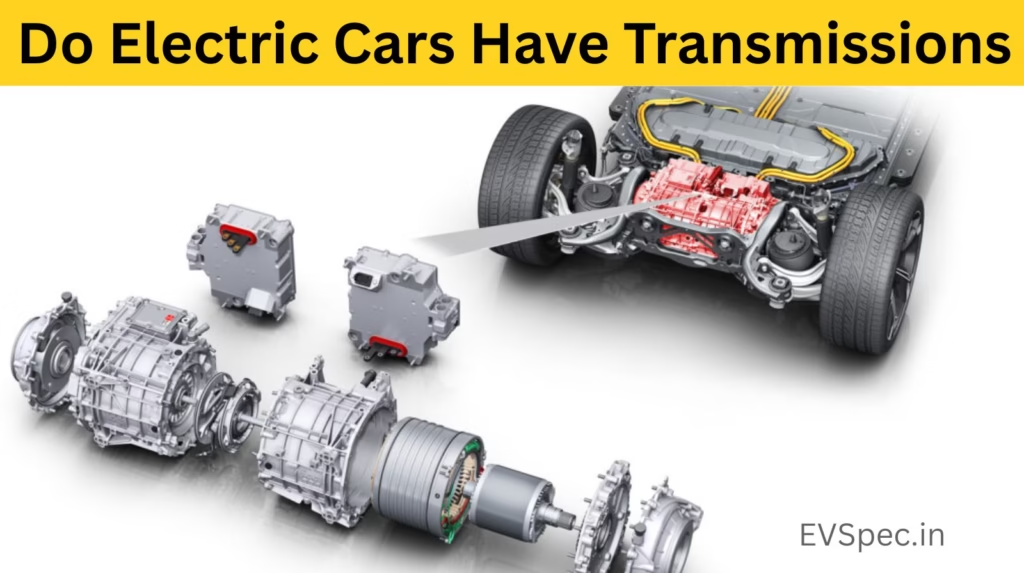
This is one of the most common questions: Do electric cars have transmissions? The answer is “sort of”—but it’s not what you expect. Nearly all modern electric cars use a very simple form of transmission called a single-speed gearbox. Unlike petrol cars that have 5, 6, or even more gears, most EVs have just one.
Why? Electric motors are very different from combustion engines. They can produce their maximum torque right from zero RPM (as soon as you press the pedal). They also spin efficiently across a much wider speed range—sometimes over 15,000 RPM—without losing power. So, unlike petrol engines, electric motors don’t need to “rev up” or “downshift” to deliver the right performance.
Why Do Most Electric Cars Use Single-Speed Transmissions?
The key reason is the unique characteristics of electric motors. As mentioned, electric motors deliver instant torque and can easily handle a huge range of speeds without needing many gears. For most daily driving situations—city traffic, quick overtakes, or steady cruising—one gear is all you need. This simplicity means less mechanical complexity, lower maintenance, and a smoother drive for EV owners.
Many of the most popular EVs, including the Tata Nexon EV, MG ZS EV, Hyundai Ioniq 5, and the world-famous Tesla Model 3, use this single-speed transmission setup for hassle-free driving.
Are There Any Electric Cars With More Than One Gear?
While almost all electric cars in India use a single-speed gearbox, there are a few exceptions worldwide. High-performance sports EVs, certain commercial electric vehicles, and specialized models might use a multi-speed transmission. These advanced setups help optimize either top speed or acceleration for sports cars, or improve efficiency in heavy-duty commercial EVs.
Porsche Taycan, for example, uses a two-speed gearbox on the rear axle to combine quick off-the-line acceleration with better high-speed performance. However, for everyday car owners, single-speed transmissions are the standard and provide all the power you need.
How Does a Single-Speed EV Transmission Work?
Let’s break it down in simple steps:
- Battery power goes to the electric motor.
- The electric motor starts spinning, producing rotational force.
- This motor is directly connected to the wheels through a single-reduction gear—the “single-speed gearbox.”
- As you press the accelerator, the car speeds up smoothly, with no gear shifts to feel.
This system is elegant and nearly maintenance-free since you don’t have the clutches, synchronizers, or oil changes seen in traditional multi-speed transmissions.
How Do Electric Cars Manage Torque and Speed?
A distinctive feature of electric cars is their ability to offer maximum torque from zero RPM (in plain words: instant pulling power, right from a standstill). Petrol engines need to “build up” power as RPM climbs; EVs deliver it the moment you press the pedal. The gearbox is simply fixed at the optimum ratio for the motor’s efficiency and wheel speed, so you get strong acceleration for city and highway use alike.
What Happens When an EV Needs to Go Faster or Climb a Steep Hill?
With a single-speed gearbox, the electric motor itself does the heavy lifting. Because it can spin at very high speeds, it handles driving at 100+ km/h and climbing slopes without additional gears. If you ever wondered “do electric cars have transmissions for steep roads?”—the answer is that the electric motor’s broad powerband makes extra gears unnecessary for most road use.
What About Reverse in Electric Cars? Is There a Reverse Gear?
A fun fact about electric cars is that they don’t need a separate reverse gear! The motor can simply spin in the opposite direction to move the car backwards. This software-driven simplicity is another big advantage for reduced weight, fewer parts, and less wear.
Do Electric Cars Need Automatic Transmission Fluid Changes?
Because most EVs use single-speed gearboxes with simple gear reductions, they typically don’t require regular transmission fluid changes like petrol or diesel cars. This reduces maintenance costs and hassle for EV owners—a key selling point for those making the switch.
Can Electric Cars Use Manual Transmissions?
Technically, it’s possible to fit a multi-speed or even manual-style gearbox to an electric car, but this is very rare. Most automakers have found that single-speed setups are more efficient, reliable, and smooth for the majority of drivers. That said, a handful of converted EVs or sports-focused projects may use more complex transmissions for hobbyists or niche markets.
Why Are Electric Cars Smoother to Drive?
With no gear shifts or clutch work, electric cars provide seamless and consistent acceleration. This makes them easier for new drivers to handle and more comfortable to drive in stop-and-go city traffic.
Do Electric Cars Have Gear Shifters? How Do You Select “Drive” or “Reverse”?
Most EVs have a simple gear selector—often a rotary knob, button, or stalk—that lets you choose “Drive,” “Neutral,” or “Reverse.” There’s no need for manual gear shifting, and you’ll feel no jolts or lag as the car accelerates or slows down.
What Role Does Regenerative Braking Play in the EV Transmission System?
Many electric cars offer “regenerative braking,” a clever system where the electric motor works in reverse while slowing the car, sending energy back to the battery instead of wasting it as heat. This usually doesn’t need extra gears but may adjust the gear ratio slightly to maximize efficiency. You can select the level of regenerative braking in many EVs, making it feel almost like “one-pedal driving”.
How Do EV Transmissions Affect Driving Range?
Because single-speed transmissions have fewer parts and reduced mechanical losses, they enhance an EV’s raw efficiency. Engineers tune the gear ratio to match the typical use, maximizing range at commonly used speeds, especially city driving, where EVs excel.
Are There Any Drawbacks to Single-Speed Transmissions in Electric Cars?
For 99% of regular commuting, single-speed gearboxes are perfect. However, for very high-speed performance or heavy-duty towing, a multi-speed transmission could theoretically provide better efficiency or acceleration. This is why you see two-speed gearboxes on performance-oriented or commercial EVs, but these are the exception rather than the rule.
Will Future Electric Cars Use Multi-Speed Transmissions in India?
It’s possible that as technology advances, more performance EVs or commercial electric buses will use multi-speed transmissions. However, for the foreseeable future, simple single-speed gearboxes will remain dominant in the Indian market for passenger EVs.
What’s the Takeaway for Indian Buyers?
If you’re considering an electric car, rest assured that the lack of multiple gears is a benefit, not a limitation. Fewer moving parts mean fewer breakdowns, lower running costs, and a smoother drive. For city use, daily commutes, and even long drives, a single-speed electric vehicle offers an easy and almost maintenance-free experience.
Frequently Asked Questions
Do electric cars have transmissions like petrol or diesel cars?
Most electric cars use a single-speed transmission, not the conventional multi-speed gearboxes. The electric motor’s wide power range makes multiple gears unnecessary for normal driving.
Can electric cars have more than one gear?
Some high-performance or commercial EVs use two-speed or multi-speed transmissions for special needs, but almost all mainstream models in India use one fixed gear for simplicity and reliability.
How do you reverse an electric car?
Electric cars reverse by spinning the drive motor in the opposite direction. There’s no physical reverse gear, just clever electronic control.
Do EVs need gear oil changes and heavy transmission maintenance?
No. Most EV transmissions are sealed and require little or no servicing compared to traditional gearboxes, meaning lower maintenance bills for the owner.
Does the single-speed transmission affect acceleration?
Quite the opposite! EVs deliver instant torque, making them feel quicker than many petrol cars, despite just one gear.