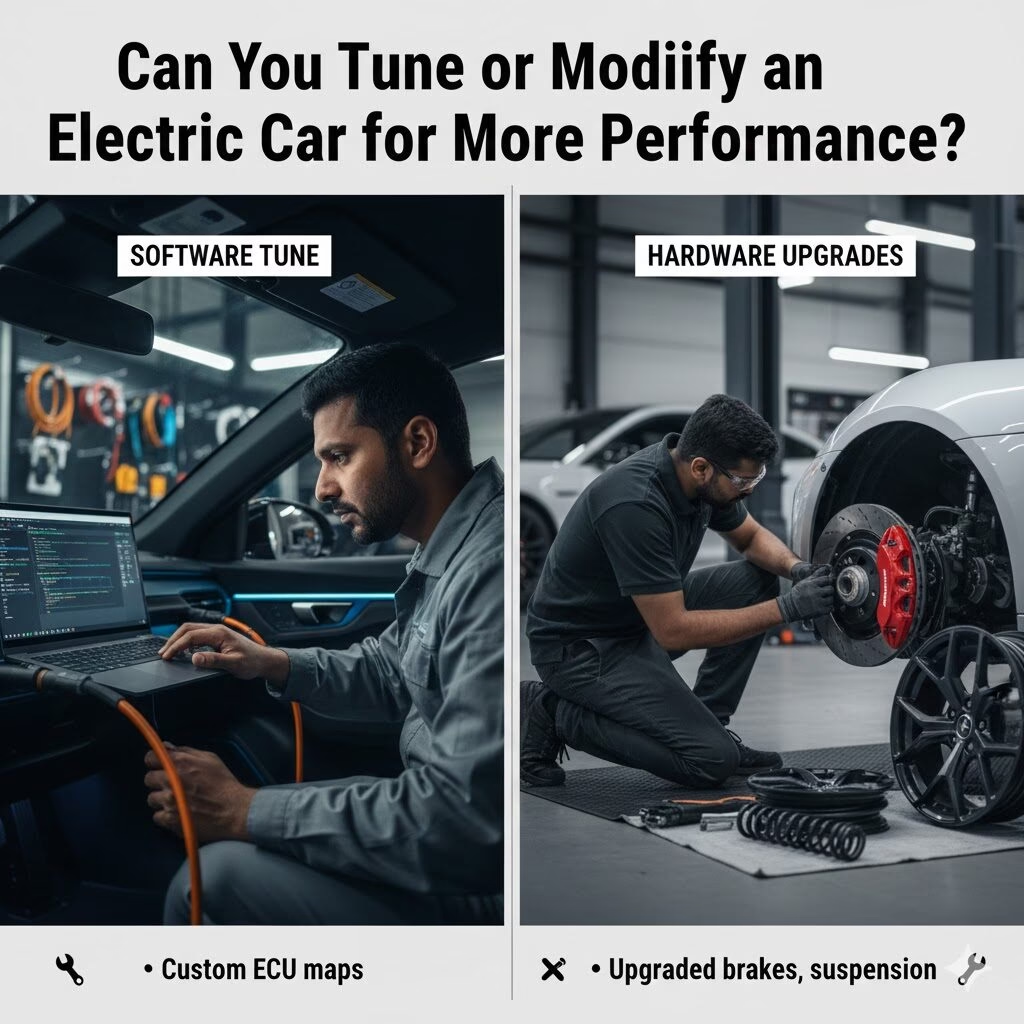
You’ve felt the instant, silent shove of your electric car’s acceleration. It’s addictive. But soon, the question creeps in—just like it does for petrolheads—can you tune or modify an electric car for more performance? Is there an “EV remap” equivalent? If you’ve searched “Can you tune or modify an electric car for more performance quora”, you’ve seen conflicting answers.
The truth is nuanced. Tuning an EV isn’t about adding a turbo or a freer-flowing exhaust. It’s a digital game played with software, hardware limits, and serious consequences. Let’s cut through the hype and see what’s actually possible, practical, and legal in India.
The Short Answer: Yes, But It’s Completely Different
Yes, you can tune an electric car, but forget everything you know about petrol engine tuning. An EV’s performance is governed by its Electric Motor, Battery Pack, and Software—the trio that creates a “digital firewall” around tuning.
- The Petrol Way: Modify hardware (air intake, exhaust, ECU chip).
- The EV Way: Modify software parameters to unlock what the hardware already has.
How Does EV “Tuning” Actually Work? (The Software Unlock)
Most manufacturers deliberately limit an EV’s power and torque output from the factory. They do this for three main reasons:
- Battery Longevity: To reduce stress and heat on battery cells.
- Component Safety: To protect the motor, inverter, and gearbox from excessive wear.
- Product Segmentation: To create performance tiers (e.g., standard range vs. long range models that often use the same hardware).
EV tuning is essentially about removing or relaxing these software limits. It can involve:
- Increasing Power & Torque Limits: Allowing the motor to draw more current from the battery.
- Adjusting Throttle Response: Making acceleration more aggressive.
- Modifying Thermal Management: Allowing components to run hotter (risky).
- Raising Top Speed Limiters: If the motor and gear ratio permit.
Real-World Example: Several third-party companies in Europe offer “performance boost” packages for cars like the Volkswagen ID.4 or Tesla Model 3. They claim power increases of 20-30% via an OBD-II port flash tune. However, this is largely unregulated territory in India.
Popular Avenues for EV Modification & Tuning
1. Official Manufacturer Performance Upgrades (The Safe Route)
- How it Works: The carmaker itself sells a software unlock via an official update.
- Example: Tesla’s “Acceleration Boost” for the Model 3 Long Range. For a one-time payment (approx. ₹1.8 lakh in the US), Tesla’s official software update shaves 0.5 seconds off the 0-100 km/h time.
- Pros: Warranty remains intact, fully tested, safe.
- Cons: Very few brands offer this, expensive.
2. Third-Party Software Tuning (The Grey Area)
- How it Works: Independent tuners hack the vehicle’s software to alter parameters. This is what most online Quora threads discuss when they ask “Can you tune an electric car”.
- Indian Reality: This market is virtually non-existent for mass-market Indian EVs (Tata, MG). The risks are immense.
- Critical Risk: It will void your entire vehicle warranty, including the expensive battery pack. It can also cause battery management system (BMS) errors, leading to reduced range or safety shutdowns.
3. Hardware Modifications (The Limited & Expensive Route)
This is where traditional “modification” thinking applies, but options are slim:
- Lightweight Wheels & Performance Tyres: The single best hardware mod for better acceleration, braking, and handling. Reducing unsprung mass has a dramatic effect.
- Suspension Upgrades: Coilovers or sport springs can improve handling and lower the center of gravity.
- Brake Upgrades: Bigger brakes are recommended if you significantly increase power.
- Aerodynamic Kits: While less critical for top speed in India, they can improve stability.
What You CANNOT Do Easily:
- Swap the Motor: Extremely complex, requires rewiring the entire car’s electrical architecture.
- “Uprate” the Battery: Adding more cells or increasing voltage is a monumental, dangerous task that risks thermal runaway (fire).
The Major Risks & Deal-Breakers (Especially in India)
- Voided Warranty: This is the biggest one. Tampering with the software will lead the manufacturer to reject any future claim on the battery, motor, or related electronics—the costliest parts of the car.
- Compromised Safety: The factory settings manage heat in the battery and motor. Pushing limits can lead to overheating, reduced component life, and in extreme cases, safety hazards.
- Reduced Range: More power means faster battery drain. Your 300 km range could drop to 220 km.
- Legal & Insurance Issues: Major drivetrain modifications may not be compliant with Central Motor Vehicle Rules. In case of an accident, your insurance company could deny the claim if they find an unauthorized tune.
- Resale Value Destruction: A modified EV will be a red flag for most used car buyers and dealerships.
The Indian Context: A Reality Check for Tata, MG Owners
If you own a Tata Nexon EV or MG ZS EV, the practical tuning scene is almost non-existent. The focus from the community is rightly on:
- Range Optimization: Through efficient driving techniques and accessory management.
- Handling Improvements: Via quality tyres (like Michelin or Apollo) and suspension upgrades from reputable brands.
- Cosmetic Personalization: Wraps, alloy wheels, and interior accents.
Seeking a pure software power boost for these cars is currently more trouble than it’s worth, given the lack of proven, reliable tuners and the catastrophic risk to warranty.
Key Takeaways: Should You Tune Your EV?
- For 99% of Owners: NO. The risks (warranty void, safety, insurance) far outweigh the gains of slightly faster 0-100 times.
- Consider if: You own an older, out-of-warranty EV (rare in India currently) and have access to a highly specialized, reputable tuner. Or, if your manufacturer offers an official performance upgrade.
- Best “Mods” for Performance Feel:
- Invest in the best tyres you can afford. This improves acceleration, cornering, and braking.
- Upgrade suspension components for flatter cornering.
- Use the car’s built-in Sport mode—that’s your factory-approved “tune.”
Conclusion: The Tuning Frontier is Still Digital (And Locked)
So, can you tune an electric car? Technically, yes. But should you in India today? Almost certainly not. The era of the backyard EV tuner hasn’t arrived yet. Performance gains are locked behind software walls that manufacturers guard closely to ensure safety and reliability.
For now, enjoy the instant torque your EV already provides—it already outpaces most equivalent petrol cars. If you crave more, focus on the chassis (tyres, suspension) and driving skills. The true potential of EV performance tuning will unfold in the coming years, ideally through safe, manufacturer-backed channels. Until then, tampering with the brain of your expensive EV is a high-stakes gamble not worth taking.
Frequently Asked Questions (FAQs)
Q1: Will using an OBD-II “performance chip” from online sites work on my Tata Nexon EV?
No. These cheap OBD-II dongles marketed online are largely scams for modern cars, especially EVs. They cannot override the secure, complex software of the vehicle’s motor controller. At best, they do nothing; at worst, they can cause error codes.
Q2: Can I improve my EV’s performance just by changing the driving mode?
Absolutely. This is the easiest and safest “tune.” Sport mode typically remaps the throttle for quicker response and may allow full motor power earlier. It’s the manufacturer’s own performance setting.
Q3: Does modifying the audio system or adding accessories affect performance?
Adding high-power audio systems or other electrical accessories draws power from the 12V auxiliary battery, not the main drive battery. It should not affect motor performance, but it can slightly increase overall energy consumption, affecting range.
Q4: Is it illegal to tune an electric car in India?
There is no specific law against software tuning. However, if the modification alters the power output beyond the certified type-approval specifications of the vehicle, it could be deemed illegal. The primary consequences are from the manufacturer (voided warranty) and insurer (rejected claims).
Q5: What about cooling system upgrades to support more power?
This is a valid but highly complex hardware modification. Upgrading cooling for the battery and motor would require custom fabrication and integration. It’s in the realm of professional race teams, not daily-driven cars, and would completely void your warranty.