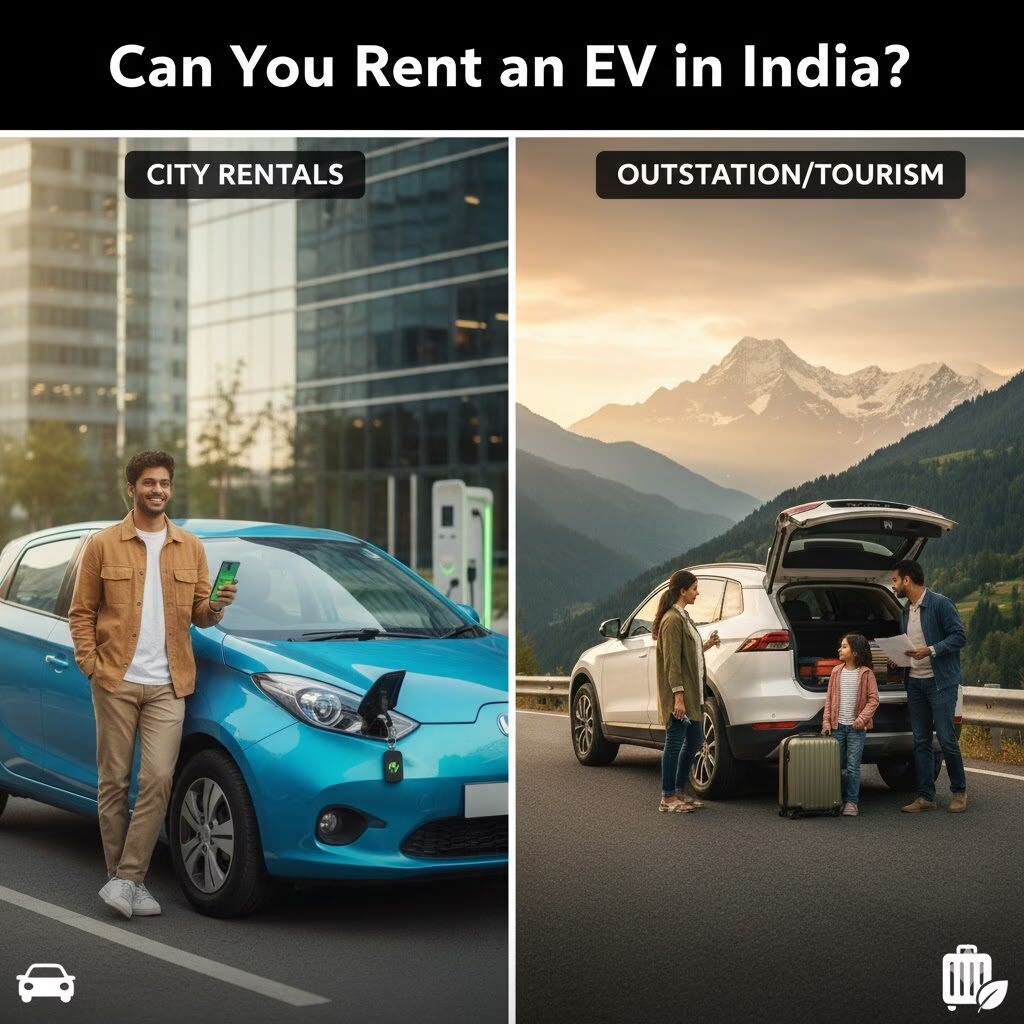
You’re planning a weekend getaway to Goa or a business trip to Bangalore. You want to reduce your carbon footprint, or maybe just experience the silent thrill of electric driving. The question pops up: Can you rent EV in India? The answer is a resounding yes, but with some important caveats. The market is young, options are limited compared to petrol cars, and that familiar worry, range anxiety—looms large.
This isn’t just a “yes or no” guide. We’ll walk you through the actual platforms, decode the real costs (including tricky charging fees), and give you a battle-tested strategy to conquer range anxiety on your rental journey.
The State of Rent EV in India: Where and How?
The EV rental ecosystem is niche but growing fast, primarily clustered in major metros and tourist hubs.
Major Rental Platforms Offering EVs:
- Zoomcar: The pioneer. Offers the most widespread selection, including the Tata Nexon EV and MG ZS EV in cities like Delhi, Bangalore, Mumbai, Hyderabad, and Pune.
- Revv: Features EVs in key cities, often with flexible subscription plans alongside short-term rentals.
- Myles: Offers EVs, though their fleet is more limited geographically.
- Local & Specialized Platforms: In tourist states like Goa and Karnataka, local operators rent out EVs like the Tata Tigor EV. Platforms like eee-Taxi in some cities also offer rental options.
How it Works:
The process is identical to renting any car: book online, verify your license and ID, and pick up the car. The critical difference is the pre-trip briefing on charging.
Decoding the Cost: Is Renting an EV Cheaper?
Here’s the breakdown. While the daily rental rate can be similar to a mid-size petrol SUV, the savings (or costs) come from “fuel” and other charges.
1. Daily Rental Rates:
- Tata Nexon EV: ₹2,500 – ₹3,500 per day.
- MG ZS EV: ₹3,000 – ₹4,000 per day.
- (Prices vary by city, season, and advance booking).
2. The Charging Cost Wildcard:
This is where you need to be sharp. Rental companies have different policies.
- Policy A: “Return with Same Charge.” You get the car at 80%, you return it at 80%. You pay for any charging you do. You need to understand the EV charging station cost per charge.
- Policy B: “Pre-paid Kilometre Packages.” You pay for a km package upfront. Charging is “free,” but the per-km rate is higher to cover it.
Understanding Public Charging Costs:
If you pay for charging, know these numbers:
- EV charging stations cost per kWh: This is the standard. It ranges from ₹15-₹18/kWh at DC fast chargers to ₹8-₹10/kWh at slower AC chargers.
- Electric vehicle charging station cost per minute: Some older chargers bill per minute (e.g., ₹30/min for DC), which can be confusing.
- Cost of EV charging station per hour: Typically for slow AC charging in parking lots; could be ₹60-₹120/hour plus energy costs.
Example Calculation:
You rent a Nexon EV (battery: 30 kWh usable). You use a fast charger at ₹16/kWh to go from 30% to 80% (charging 15 kWh).
- Your EV charging station cost per charge for that session = 15 kWh x ₹16 = ₹240.
- This gives you ~150 km of range, making the “fuel” cost roughly ₹1.6/km. Compare that to a petrol SUV at ₹10-₹12/km.
Pro Tip: Search for the “Cheapest EV charging stations in India” using apps like PlugShare, Tata Power EZ Charge, or Statiq. You’ll often find that mall parking lots offer cheaper AC charging than highway fast chargers.
Conquering Range Anxiety: Your Pre-Rental Checklist
Range anxiety is psychological. Beat it with preparation.
Before Booking:
- Plan Your Route: Use Google Maps and overlay it with charger maps from PlugShare. Identify charging stops every 150-200 km for a Nexon/MG ZS EV.
- Check the Car’s Real Range: Ask the rental company for the real-world range, not the ARAI figure. Assume a 20% buffer for AC usage and hills.
- Verify Charging Cables: Ensure the rental includes a portable charger (for 15A sockets) and a Type 2 cable (for most public AC chargers).
During the Rental:
- Charge Before You’re Low: Don’t wait for 10%. Top up at 30-40% during breaks. A 30-minute fast-charging coffee stop is less stressful than a desperate hunt.
- Use the Car’s Eco Mode: This extends range by limiting power and optimizing climate control.
- Have a Backup: Know the location of a Tata Power EV charging station or another reliable network along your route as a guaranteed fallback.
The Big Picture: Business Potential & Infrastructure
The growth of EV rentals is tied to infrastructure. For entrepreneurs, this sparks a question: What about the EV charging station setup cost in India per month or the Tata Power EV charging station franchise cost?
- Tata Power EV charging station franchise cost involves an initial investment that can range from ₹15-₹25 lakh for a DC fast charger, with revenue sharing with Tata Power.
- The monthly running cost (EV charging station setup cost in India per month) includes electricity, maintenance, and platform fees, which can be ₹50,000-₹1,00,000.
- This business model is becoming more viable as the number of rented and personal EVs skyrockets in cities.
Key Takeaways: Should You Rent an EV in India?
YES, if you:
- Are traveling within a city or on a well-connected inter-city route (e.g., Delhi-Jaipur, Mumbai-Pune).
- Are comfortable using smartphone apps to locate chargers.
- Want to experience an EV before buying one.
- Are planning a short trip where you can charge once at your destination.
RECONSIDER, if you:
- Are traveling to remote areas with sparse charging infrastructure.
- Are on a very tight, inflexible schedule where a 45-minute charging stop is a dealbreaker.
- Are not tech-savvy and the thought of using multiple apps stresses you out.
Conclusion: An Experience, Not Just a Rental
Renting an EV in India today is more than just getting from A to B. It’s an active experience that requires a bit more planning but offers significant fuel savings, a premium, silent drive, and the satisfaction of low-emission travel.
The market is maturing rapidly. As charging infrastructure expands—driven by companies investing in the Tata Power EV charging station cost and similar networks—and as rental companies standardize their policies, EV rentals will soon become as straightforward as renting any other car. For now, be the prepared, savvy renter who sees the adventure, not the anxiety.
Frequently Asked Questions (FAQs)
Q1: Do EV rental companies provide free charging?
Rarely. Most companies either use the “return with same charge” policy (you pay for what you use) or include charging in a higher per-km package. Always read the fuel policy details before booking.
Q2: What if I can’t find a charging station and the battery runs out?
This is treated like running out of fuel. Standard rental companies will assist you, but you will be charged a hefty service fee (often ₹1000-₹2500) plus the cost of towing or a mobile charger. This is why planning is non-negotiable.
Q3: Can I charge a rental EV at my hotel or a friend’s house?
Yes, absolutely. Use the provided portable charger with a standard 15A socket. This is often the cheapest and most convenient way to charge overnight. Always inform the property owner.
Q4: Are there any special driving license requirements to rent an EV?
No. Your standard valid Indian driving license for four-wheelers is sufficient. There is no special “EV license.”
Q5: Which is the most common EV available for rent, and what is its true range?
The Tata Nexon EV is the most common. Its real-world range with AC on is between 250-300 km on a full charge, depending on driving style and terrain. For highway trips at 80-100 km/h, assume the lower end of this range.