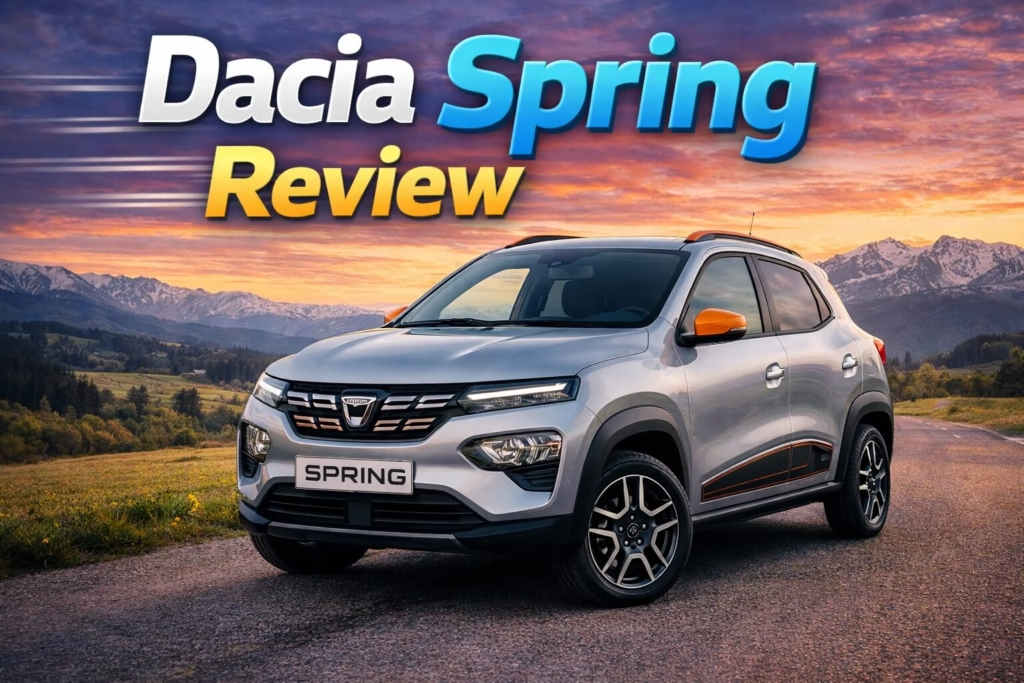
The 2026 Dacia Spring continues to set itself apart as one of the most affordable electric cars on sale in Europe, now updated with new motors, a longer real-world range, enhanced charging and a refreshed feature set. Its city-friendly footprint, straightforward usability, and unbeatable price tag make it a strong contender for budget-focused urban EV buyers.
Overview – What Is the Dacia Spring?
The Dacia Spring is a compact electric city car designed primarily for urban and suburban driving. It seats four passengers, offers generous boot space for its size, and presents a simple, functional approach to electric mobility — perfect for first-time EV buyers and city dwellers.
For 2026, Dacia has introduced updated motors and battery tech, keeping the Spring relevant in an increasingly competitive budget EV segment while retaining its position as one of the cheapest new EVs available.
Design & Urban Practicality
The Spring’s overall compact size makes it ideal for urban environments:
- Small exterior dimensions make tight parking and narrow streets easier to navigate.
- Upright SUV-like styling gives it a versatile and modern look despite its budget nature.
- Large windows and high seating position improve visibility in city traffic.
Practical features like a 308-liter boot help it punch above its weight for everyday errands or shopping trips.
Interior & Comfort
Inside, the Spring prioritizes functionality over luxury. Cabin space suits city use and short journeys well:
- Space for four adults or two adults and two children
- Simple, easy-to-use controls and dashboard layout
- Optional 10.1-inch touchscreen with Apple CarPlay and Android Auto on higher trims
- Basic but adequate comfort features such as manual air-conditioning and adjustable steering
Reviewers have noted the interior quality reflects the budget-focused philosophy of the Spring; materials are hard-wearing but not premium, and rear seat room is tighter than larger EVs.
Performance & Powertrain
For 2026, the Spring gets better performance and more usable power, with two motor options:
- Spring 70: ~70 PS (≈52 kW) motor
- Spring 100: ~100 PS (≈75 kW) motor
- Front-wheel drive layout for both trims
- Battery: ~24.3 kWh lithium-iron-phosphate (LFP) pack
Performance improvements are noticeable compared to earlier Spring models:
- 0–62 mph in ~12.3 s for the 70 PS model
- 0–62 mph in ~9.6 s for the 100 PS version
- Better mid-range torque, making city joins smoother and less strained than before.
Top speed remains around 125 km/h, aligning with its urban and suburban mission.
Range & Charging
Range in the 2026 Spring is sufficient for city and short trip usage:
- WLTP range: up to ~225 km (≈140 miles) on a single charge from the 24.3 kWh battery
- Real-world range depends on conditions but is generally reliable for daily driving needs
Charging times:
- DC fast charging: up to 40 kW (≈20–80 % in around 29 min for higher trims)
- AC charging: ~7 kW support for home charging (full overnight top-up in about 3–4 hours)
These charging capabilities make the Spring a practical city EV, especially where DC chargers are available near work or shopping areas.
Technology & Features
The Spring’s equipment list has improved for 2026:
- Digital instrument cluster on most trims
- Smartphone-friendly infotainment with connectivity options
- Cruise control, rear parking sensors and helpful urban-driving aids
- Vehicle-to-load (V2L) functionality on select trims for powering small devices
While not packed with luxury tech, its practical features cover key day-to-day needs.
Safety & Practicality
Safety is basic compared to larger EVs:
- Standard active safety may be limited since low pricing and simplicity are priorities
- Poor Euro NCAP ratings in past testing highlight cautious expectations around crash safety
However, for city driving and low-speed urban environments, the Spring’s package is sensible for its price bracket.
Pricing & Value Positioning
One of the biggest selling points of the 2026 Spring is its price:
- Entry-level pricing in markets like the UK starts from approx £12,240 after grants, making it one of the cheapest new EVs on sale.
- Even before incentives, the Spring remains exceptionally affordable relative to most electric cars.
This makes it a compelling choice for budget-oriented EV buyers and urban commuters who want electric mobility with minimal upfront cost.
Pros & Cons
Pros
- Unbeatable affordability in the EV world
- Compact dimensions perfect for city traffic
- Improved power and range over earlier versions
- Practical charging profile with fast-charge support
Cons
- Limited range compared with larger EVs
- Interior quality and space are basic
- Safety ratings and crash protection lag behind many modern EV rivals
- Not ideal for long highway journeys or heavy load use
FAQs
What is the real range of the 2026 Dacia Spring?
It officially lists around 225 km WLTP, which is adequate for city commuting and short trips.
How fast can it charge?
With a 40 kW DC charger, it can go from roughly 20 % to 80 % in about 29 minutes on higher-trim models.
Is the Spring practical for families?
It’s more suited to small families or single commuters given its compact size and four-seat layout.
Is the Spring safe?
Safety ratings are basic, and its Euro NCAP performance historically has been weak, so cautious evaluation is advised if safety priorities are high.
Summary
The 2026 Dacia Spring remains a standout budget EV, offering one of the most accessible entry points into electric driving without compromising basic functionality. Its compact dimensions, improved performance, urban-friendly range, and ultra-competitive pricing make it ideal for city commuters and first-time EV owners. While it won’t match premium EVs in space or luxury, its clear value proposition ensures it remains one of the cheapest and most practical electric cars for everyday urban use in the 2026 EV market.