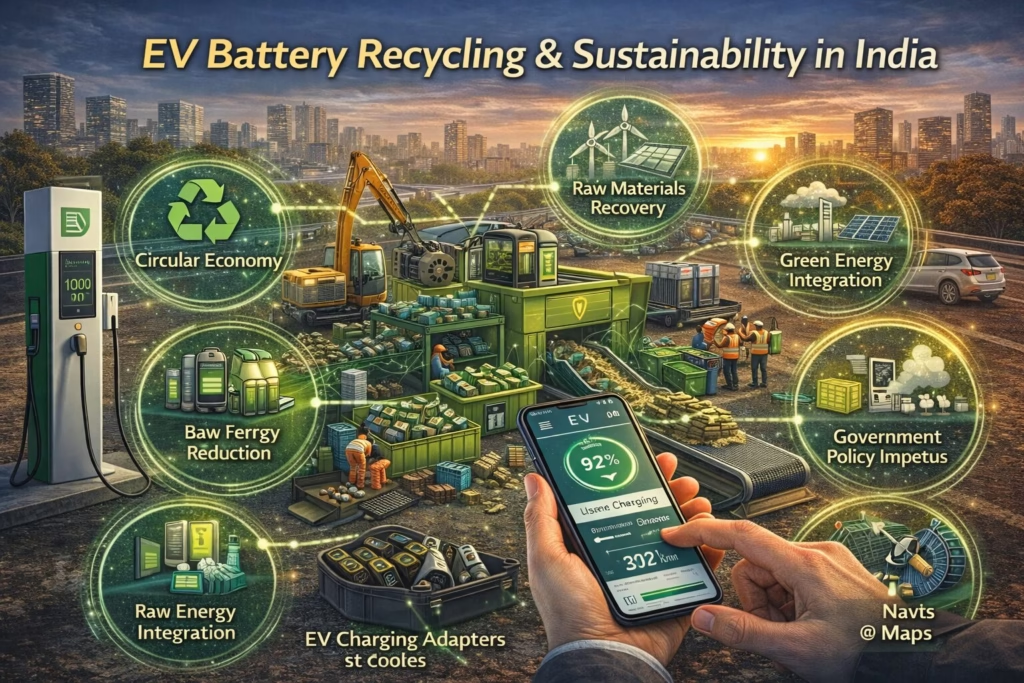
As electric vehicles (EVs) become more common on Indian roads, questions about what happens to EV battery once they age are gaining importance. EV batteries typically last around 6-10 years before capacity drops significantly, and India’s rapid EV growth means sustainable management of these batteries is a key part of long-term environmental and economic planning.
This article explains how EV batteries age and retire, what recycling and repurposing options exist, government rules shaping the ecosystem, and how sustainability and circular economy goals are being addressed in India.
How Long EV Batteries Last in Real Use
Most EVs on Indian roads use lithium-ion batteries, which degrade gradually over time. Depending on usage patterns, charging habits, climate conditions, and depth of discharge, an EV battery can last six to ten years or longer before its capacity drops enough to meaningfully reduce usable range.
Once capacity falls below acceptable levels for vehicle use, the battery doesn’t stop working — it just becomes less efficient. At that point, several options emerge before final recycling.
First: Second-Life Uses Before Recycling
Before being scrapped, EV batteries often have enough capacity left for second-life applications. Even after they are no longer ideal for powering vehicles, many EV batteries still retain a significant portion of their charge capacity. These can be repurposed for:
- Stationary energy storage at homes, businesses, or grid facilities
- Backup power systems for telecom towers and critical infrastructure
- Integration into renewable energy storage systems like solar or wind farms
Repurposing EV batteries in this way avoids premature waste and extends the useful life of expensive materials — a strategy central to the circular economy concept.
For example, research shows that used lithium-ion batteries can be repurposed for energy storage and grid applications, which helps reduce pressure on new battery production and supports sustainability goals.
What Happens After Second Life — Battery Recycling
When batteries reach the end of both their first life in vehicles and their second life in storage systems, recycling becomes critical. Recycling involves extracting valuable materials such as lithium, cobalt, nickel, and copper so they can be reused in new batteries or other industrial applications.
Recycling processes may include:
- Mechanical disassembly to separate modules and cells
- Hydrometallurgical recovery, where battery materials are dissolved and purified
- Pyrometallurgical recovery, which uses heat to separate metals
Advanced recycling can recover a high proportion of battery materials, sometimes approaching 95 % recovery rates — a concept often referred to as urban mining.
India’s EV Battery Recycling Regulations
In 2022, India introduced the Battery Waste Management Rules, which include Extended Producer Responsibility (EPR) obligations. These rules require battery manufacturers, importers, and recyclers to collect and recycle used batteries in environmentally appropriate ways.
EPR pushes vehicle and battery makers to:
- Ensure collection networks are in place
- Report recycling and recovery volumes
- Minimise environmental harm from disposal
Such regulatory frameworks are essential to building a sustainable lifecycle for EV batteries.
Market Growth & Recycling Needs
India’s EV adoption targets — such as aiming for millions of electric vehicles by 2030 — imply a corresponding surge in battery waste volumes. Estimates suggest India could generate over 50,000 tonnes of end-of-life EV batteries annually by 2030.
Another projection indicated that by around 2030, India may generate 128 GWh of recyclable battery volume, highlighting the scale of recycling requirements in the near future.
Meeting these needs will require:
- Efficient collection infrastructure
- Recycling and refinement facilities
- Integration with second-life and repurposing markets
Circular Economy & Sustainability Goals
Recycling and second-life strategies support a circular battery economy in India. The idea is to keep materials in use as long as possible and reduce the need for mining new raw materials — which are often imported. RMI
Circularity offers several sustainability advantages:
- Reduces demand for raw mineral imports which India currently depends on heavily
- Lowers environmental impact from mining and waste disposal
- Creates new industries and green jobs in recycling and battery remanufacturing
- Supports renewable integration by providing storage resources
Industry analysts estimate that building efficient recycling and second-life markets could unlock significant economic value while supporting India’s goals of net-zero emissions by 2070.
Who’s Leading Battery Recycling in India
A number of Indian companies and startups are investing in recycling and second-life battery solutions:
- Lohum Cleantech operates refurbishing and refining facilities for lithium-ion batteries.
- Attero Recycling and other firms work on extracting valuable materials from used batteries.
- Tata Chemicals, Gravita India, and others are building capacity for battery waste management.
These efforts aim to turn what would be hazardous waste into a valuable resource stream for future battery manufacturing and renewable projects.
Challenges in Battery Recycling
Despite growth and policy support, several challenges remain:
- Recycling infrastructure is still limited, especially outside big cities.
- Informal waste handling can cause environmental hazards if not regulated.
- High costs and technical complexity of lithium-ion recycling processes.
- Ensuring consistent collection and tracking of end-of-life batteries.
Building safe, high-capacity recycling systems across India is critical as EV adoption rises.
FAQs
Why can’t EV batteries just be thrown in landfills?
Lithium-ion batteries contain hazardous chemicals and heavy metals. Improper disposal can contaminate soil and water and pose fire risks, making recycling essential.
What is second-life use of an EV battery?
Second-life refers to repurposing used EV batteries — after they no longer meet vehicle performance needs — for less demanding energy storage roles before final recycling.
Are recycled battery materials used in new EV batteries?
Yes. Recovered materials like lithium and cobalt can be refined and reused in new batteries, reducing reliance on mining.
Is India ready for large scale EV battery recycling?
India has strong policy backing and emerging industry players, but needs more infrastructure and formal supply chains to match future volumes.
Summary
EV batteries have finite lives, typically around 6–10 years, but that is only part of the story. Instead of ending up as waste, these batteries can be given a second life in storage applications or, ultimately, be recycled to recover valuable materials. India’s regulatory framework like the Battery Waste Management Rules (2022) and a growing recycling ecosystem aim to manage these transitions sustainably. With EV adoption set to rise sharply, building robust recycling and repurposing pathways is key to minimizing waste, reducing environmental harm, and supporting a circular economy that retains value while advancing sustainable mobility.