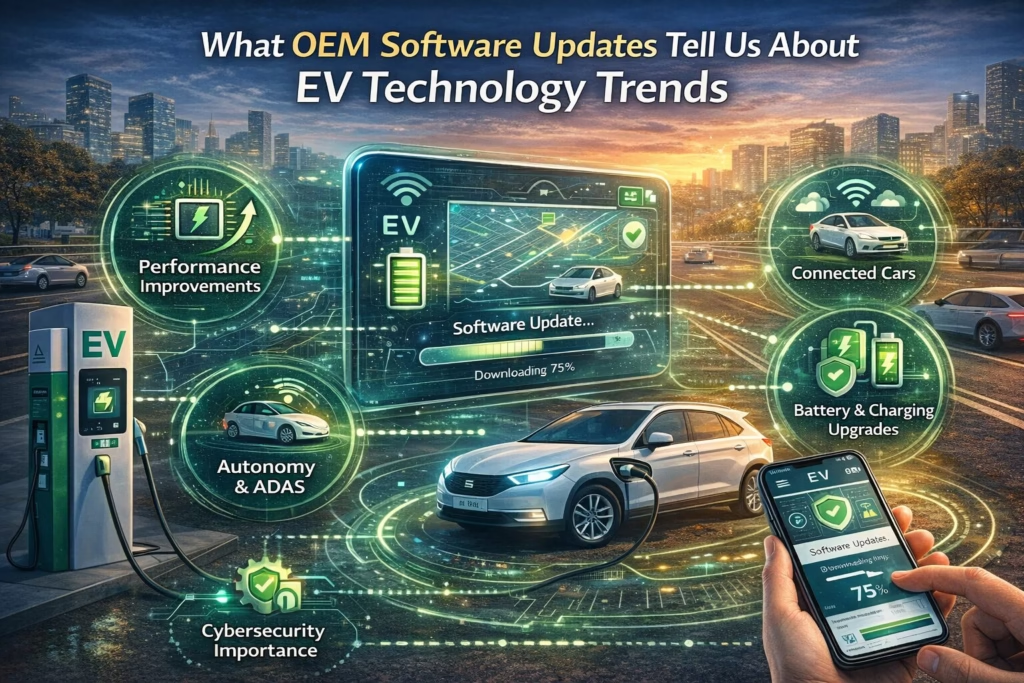
Over-the-air (OTA) and regular software updates from automakers (OEMs) are no longer just bug fixes — they’re windows into the future of EV technology and automotive innovation. Today’s EVs rely heavily on software for everything from performance and charging to safety and infotainment. How updates evolve reveals broader trends in vehicle design, digital connectivity, user experience, and industry direction.
This article explains what OEM software updates say about where EV tech is headed and what that means for drivers, manufacturers, and future vehicles.
Quick Answer
OEM software updates are reshaping electric vehicle capabilities throughout the lifecycle — from real-time performance enhancements and safety patches to feature rollouts and connectivity upgrades that reflect broader EV technology trends such as connected cars, software-defined vehicles, cybersecurity focus, and advanced charging strategies.
1. The Expansion of Over-the-Air Updates Shows Software-Defined Vehicles Are the Future
Electric vehicles increasingly resemble computers on wheels rather than traditional vehicles. This shift has made OTA updates essential, not optional. The global over-the-air software update market is expanding rapidly, projected to grow from roughly USD 5.2 billion in 2025 to USD 25 billion by 2035 as connected and electric vehicles proliferate. These updates are not limited to infotainment but also include critical vehicle control systems and performance enhancements.
This growth signals a broader trend: leading automakers are driving toward software-defined vehicle (SDV) architectures, where software plays a central role in vehicle performance, safety, and user experience. Such approaches let manufacturers add value long after the vehicle is sold, much like software updates on smartphones.
2. Performance Enhancements Without Dealership Visits
One of the clearest benefits — and trends — revealed by OEM updates is continuous performance refinement. Recent updates from EV makers like Rivian demonstrate this trend well: a software update optimized battery temperature control and charging algorithms, enabling faster DC charging speeds and improved energy management without changing hardware.
What this tells us:
- Manufacturers are improving charging performance remotely
- Vehicles adapt to evolving standards and user habits over time
- Drivers benefit from feature improvements without dealership trips
This mirrors broader industry direction toward vehicles that get better with age rather than stagnating.
3. Greater Connectivity and In-Car Intelligence
EV software updates increasingly focus on connected services, telematics, and digital experiences. These systems do more than navigate or stream music — they manage energy use, optimize charging behavior, monitor battery health, and interface with infrastructure. Connected features now form a core part of the EV experience, bridging vehicle and user smartphones or cloud services.
The growing reliance on connected architectures indicates a trend toward fully networked vehicles, where data drives operational improvements and user engagement. Updates increasingly include integration with companion apps, remote diagnostics, and cloud connectivity features.
4. Safety, Security and Regulatory Alignment
As vehicles grow more connected, software security becomes a paramount concern. The shift to SDVs and continuous software updates increases exposure to cyber threats if not managed properly. Modern OTA frameworks emphasize secure update protocols and cybersecurity as part of the overall development roadmap.
That OEMs deliver regular security patches through software updates implies these vehicles are expected to stay secure against evolving threats, aligning with increasing consumer and regulatory expectations around automotive cybersecurity.
5. Smarter Battery and Energy Management
Another trend revealed through software updates is enhanced battery and energy management. OEMs can adjust charging curves, regenerative braking rates, and thermal management strategies remotely — often improving range or charging efficiency without hardware changes.
This reflects a software-centric approach to core EV systems, where battery longevity and charging optimization become software differentiators among competing models.
6. Remote Feature Boosts & In-Car Experience Upgrades
Increasingly, OEM updates introduce entirely new features: enhanced driver assistance systems, updated user interfaces, improved navigation data, and in-car entertainment enhancements. This trend points to cars that are no longer static appliances but dynamic platforms capable of evolving features over time.
For users, this means:
- New features long after initial purchase
- Improved usability and comfort
- Higher long-term value and lower obsolescence
From a technology trend perspective, it means vehicles are now expected to support a long lifecycle with software-driven improvements.
7. Reduced Dependence on Traditional Service Networks
Traditionally, updating a vehicle’s systems required a visit to a service center. With OTA updates, remote updates reduce service costs and vehicle downtime. They also reflect a broader move toward remote maintenance and predictive diagnostics — both hallmarks of modern automotive engineering.
This reduces logistical constraints for users and highlights how software integration supports a more seamless ownership experience.
8. Insights into Autonomous and ADAS Development
Many OEM updates target driver assistance and vehicle autonomy features. Over time, these updates improve software behind adaptive cruise control, lane-keeping aids, and automated parking — often without requiring new sensors.
This trend suggests a future where advanced driver assistance systems continually evolve via software, reducing the gap between regulated autonomous capabilities and everyday driving support.
9. Market Growth Mirrors Software Importance
The rapid expansion of the OTA market parallels EV market growth globally. With EV adoption rising sharply — sales exceeding 17 million units worldwide in 2024 — OEMs are under pressure to deliver ongoing value through software enhancements.
This global momentum means that software updates will play a far greater role in differentiating EV models and brands in the coming years.
10. Multi-Functional Vehicle Ecosystems
Software updates increasingly integrate EVs with broader ecosystems — from smart homes to vehicle-to-grid (V2G) concepts. Although practical deployment remains in early stages, ongoing software development indicates OEMs are preparing vehicles to be nodes in larger energy and urban mobility networks, not isolated machines.
Pros and Cons of Heavy Software Dependence
Pros
- Performance and feature improvements over time
- Enhanced safety and energy efficiency
- Lower maintenance needs via remote diagnostics
- Better alignment with connected infrastructure
Cons
- Increased importance of cybersecurity defenses
- Software complexity can challenge users and technicians
- Dependence on stable connectivity for updates
FAQs
What kinds of updates do EVs receive?
Most EV updates include performance tuning, security patches, infotainment enhancements, battery management tweaks, and safety system upgrades.
Are all updates free?
Typically yes for basic maintenance and safety updates; some premium features may require subscriptions depending on OEM strategy.
Do updates improve range?
Yes, some updates optimize battery and motor management to improve real-world efficiency.
Can I skip updates?
It’s usually best not to skip them; some OEM policies link updates to warranty conditions.
Summary
OEM software updates reveal several deeper trends in EV technology:
- Vehicles as connected platforms rather than static machines
- Software-defined vehicle (SDV) growth driving innovation
- Continuous performance and safety improvements
- Strong software security emphasis
- Integration with broader mobility ecosystems
- Reductions in service dependency
In short, software updates are transforming EV ownership and pointing toward a future where EVs evolve continuously throughout their lifecycle — not just at the point of sale. As the automotive industry matures, manufacturers that excel at remote software delivery will lead the next wave of innovation and customer satisfaction.