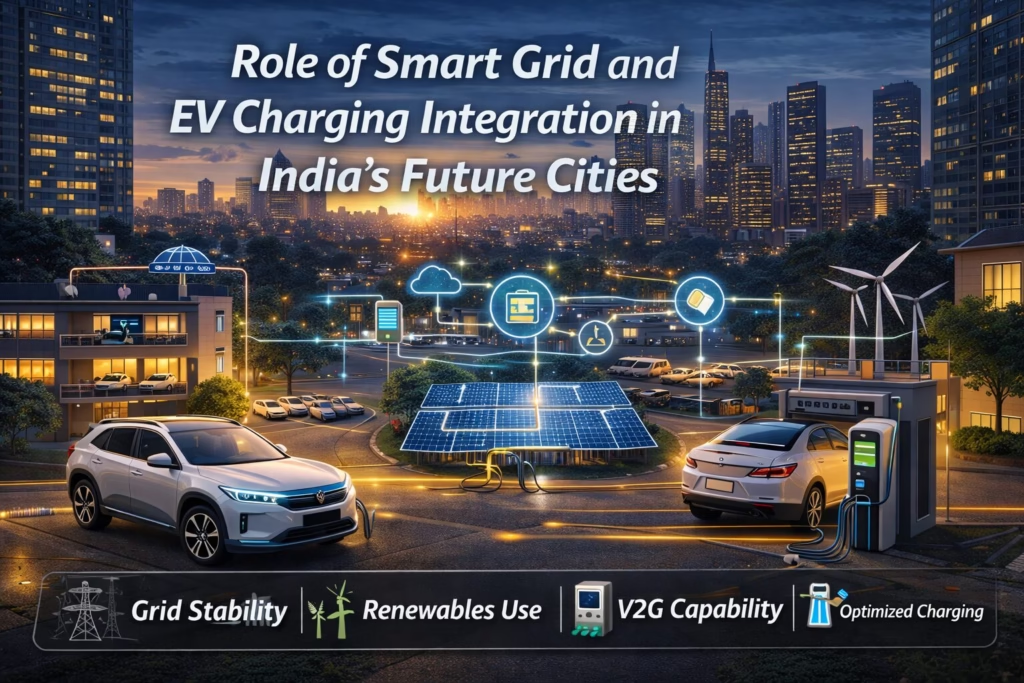
India’s electric vehicle adoption is accelerating, but vehicles alone cannot carry the transition. The real backbone of large scale electrification is the power system that supports charging at homes, offices, highways, and public spaces. This is where smart grids and EV charging integration become critical. Future Indian cities will rely on intelligent electricity networks that balance demand, manage charging loads, and keep the grid stable while millions of EVs plug in daily.
This article explains what smart grids are, how they integrate EV charging, why they matter for Indian cities, current progress, real world benefits, challenges, and what the next decade looks like.
Quick answer
Smart grids allow EV charging to happen without overloading India’s power system by using real time data, automated control, and two way communication between vehicles, chargers, and utilities. In future Indian cities, smart grid based EV charging will reduce power outages, lower charging costs, support renewable energy, and make large scale EV adoption possible.
What is a smart grid in simple terms
A smart grid is an electricity network that can monitor, communicate, and respond automatically instead of delivering power in one direction only.
Traditional grids:
- Supply electricity from power plants to users
- Have limited real time visibility
- Struggle during sudden demand spikes
Smart grids:
- Use digital meters, sensors, and software
- Track electricity demand in real time
- Adjust supply automatically
- Communicate with charging stations and EVs
This intelligence is essential once EVs become a major electricity consumer.
Why EV charging stresses traditional city grids
EV charging adds a new and unpredictable load on urban electricity networks.
Common challenges include:
- Multiple EVs charging at the same time in apartment complexes
- Fast chargers drawing large power bursts
- Evening peak demand coinciding with home charging
- Local transformers overheating in dense areas
Without smart grid coordination, widespread EV adoption could lead to voltage drops, outages, and infrastructure damage in cities.
How smart grids integrate EV charging
Smart grid and EV charging integration works through coordination rather than restriction.
1. Smart charging management
Smart charging systems:
- Delay or slow charging during peak hours
- Increase charging speed when demand is low
- Automatically balance power across multiple chargers
For example, if ten cars plug in at an office parking lot, the system distributes available power evenly instead of overloading one circuit.
2. Time based electricity pricing
Smart grids enable time of day pricing, where electricity costs less during off peak hours.
This encourages:
- Overnight home charging
- Daytime charging when solar generation is high
- Reduced stress during evening peaks
India’s utilities are gradually introducing such tariff structures under guidance from entities like Ministry of Power.
3. Renewable energy integration
Smart grids connect EV charging with renewable sources such as solar and wind.
In future cities:
- Office chargers will draw power directly from rooftop solar
- EVs will charge faster when renewable generation is high
- Grid dependency on fossil fuel peaker plants will reduce
Policy planning bodies like NITI Aayog consistently highlight this synergy between EVs and clean energy.
4. Vehicle to grid readiness
Vehicle to grid allows EV batteries to send electricity back to the grid when needed.
While still emerging in India, this capability can:
- Support grid stability during peak demand
- Provide backup power to buildings
- Generate revenue for EV owners in the future
Smart grids are essential for managing this two way energy flow safely.
Role of smart grids in future Indian cities
Urban residential zones
In high rise apartments, smart grids:
- Monitor charging loads per building
- Prevent transformer overload
- Allocate fair power distribution among residents
This avoids costly infrastructure upgrades while supporting EV growth.
Commercial and office hubs
In business districts:
- Smart grids coordinate hundreds of chargers
- Charging aligns with solar production
- Fleet vehicles charge without disrupting office power needs
Cities like Bengaluru, Pune, and Gurugram are already experimenting with such models.
Public charging corridors
Smart grids allow city authorities to:
- Monitor charger availability
- Predict peak usage times
- Plan new chargers based on data
This reduces idle infrastructure and improves charger reliability.
Benefits of smart grid based EV charging
Grid stability
Automatic load balancing prevents outages and voltage fluctuations.
Lower charging cost
Dynamic pricing reduces energy cost for users who charge during off peak hours.
Faster EV adoption
Reliable charging infrastructure increases consumer confidence.
Better renewable utilization
EVs act as flexible loads that absorb clean energy when available.
Reduced infrastructure spending
Utilities avoid unnecessary transformer and cable upgrades.
India’s current progress
India is actively laying the groundwork for smart grid enabled EV charging.
Key developments include:
- Smart meter rollout in major cities
- National EV charging guidelines supporting managed charging
- Pilot projects integrating renewable powered charging hubs
- Utility level EV demand forecasting
Organizations such as Bureau of Energy Efficiency play a major role in standard setting and implementation.
Challenges that still remain
Infrastructure fragmentation
Different states and utilities adopt different standards and timelines.
Data and cybersecurity
Smart grids rely heavily on data, making security essential.
Consumer awareness
Many users are unaware of smart charging benefits and pricing models.
Interoperability
Chargers, vehicles, and grid systems must communicate seamlessly.
Addressing these gaps is critical before EV penetration reaches mass scale.
What to expect by 2030
By the end of this decade, Indian cities are likely to see:
- Mandatory smart chargers in new buildings
- City wide EV load management systems
- Integration of rooftop solar with public charging
- Early vehicle to grid pilots
- Lower electricity cost for smart charging users
EVs will no longer be passive electricity consumers but active participants in the energy ecosystem.
FAQs
Why are smart grids important for EVs
They prevent power outages and allow millions of EVs to charge without stressing the grid.
Will smart grids increase charging cost
No. They usually reduce costs by shifting charging to cheaper time slots.
Can old buildings support smart charging
Yes, with smart meters and managed charging systems.
Is vehicle to grid already active in India
It is in pilot stages and expected to expand later in the decade.
Summary
Smart grids are the silent foundation behind India’s EV future. Without intelligent power management, city wide EV adoption would strain electricity networks and slow progress. With smart grid and EV charging integration, future Indian cities can support cleaner transport, stable power supply, lower energy costs, and stronger renewable usage.
As India moves toward electric mobility at scale, smart grids will not just support EVs. They will shape how cities consume, manage, and share energy in a connected and sustainable way.