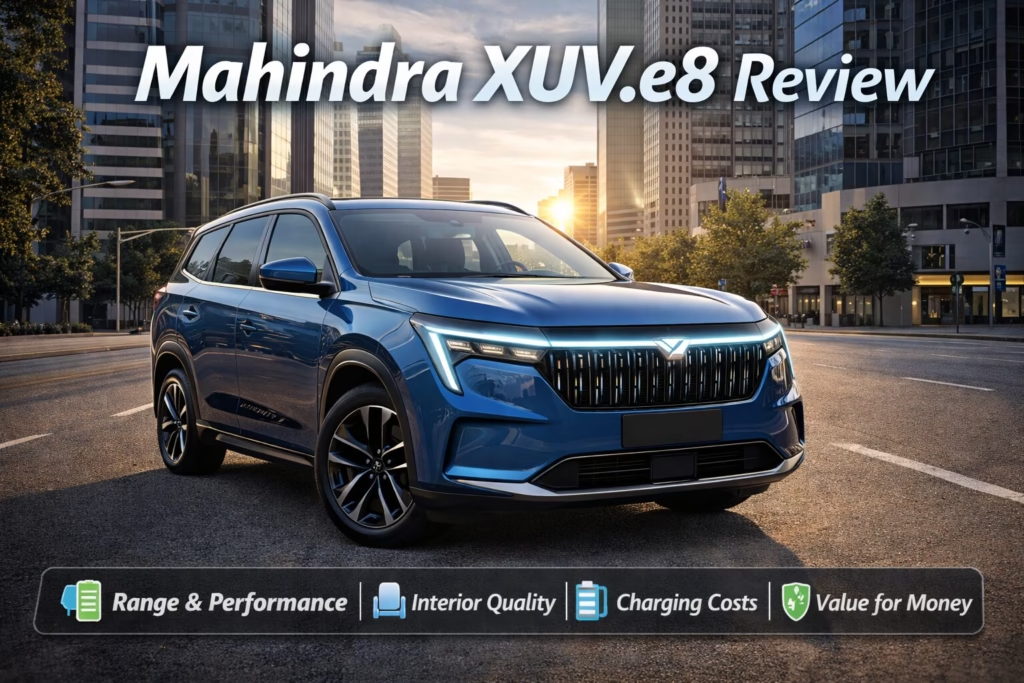
The Mahindra XUV.e8 is one of India’s most anticipated upcoming electric SUVs. Positioned to compete in the compact to mid-size electric SUV category, it promises a blend of range, performance, practicality, and modern technology. With Mahindra’s growing investment in EVs and a strategy focused on purpose-built electric vehicles, the XUV.e8 aims to raise the bar and challenge long-established rivals like the Hyundai Creta Electric and Tata Nexon EV in key areas like efficiency, range, features, and overall value. Its expected price band suggests a strong value proposition in one of the fastest-growing segments of the Indian market.
What Is the Mahindra XUV.e8?
The Mahindra XUV.e8 is an all-electric SUV developed as a fully purpose-built battery-electric vehicle (BEV). Unlike earlier EVs that were often adapted from internal combustion platforms, this model is engineered from the ground up for electrification, aiming to deliver optimized packaging, battery performance, and driving dynamics.
Mahindra appears to be positioning the XUV.e8 in a price range of around ₹25 lakh to ₹30 lakh, hinting at a competitive offering in its class with a focus on practicality and EV-centric design. CarLelo
The SUV is expected to appeal to buyers who want strong features and range without stepping too far up into premium EV pricing.
Expected Specifications & Powertrain
While final official details are awaited, what’s known and projected for the XUV.e8 points toward solid performance and usability:
- Battery & Range: Likely to be competitive with modern EV benchmarks
- Performance: Enough power and torque for confident city and highway driving
- Charging: Fast charging capability expected to ease long-distance travel
- Seating: Five occupants with comfortable cabin space
As a purpose-built EV, space efficiency is likely better than current Mahindra electric models that are based on existing platforms.
Exterior Design and Presence
Visually, the XUV.e8 is expected to continue Mahindra’s bold SUV design language with a modern electric twist. A sleek front fascia, aerodynamic elements, LED lighting signatures, and sharp styling cues will help it stand out on the road.
The silhouette is anticipated to balance SUV practicality—high driving stance, good road presence, and spacious proportions—with lines that signal its electric nature. The exterior design should appeal to buyers who want a mainstream SUV look with contemporary electric design elements.
Interior Space and Comfort
Inside, the XUV.e8 is expected to prioritize comfort and technology. With five-seat configuration and well-thought-out ergonomics, it should cater to families and daily commuters alike.
Key interior expectations include:
- A digital instrument cluster and a large infotainment touchscreen
- Comfort-oriented seating and quality materials
- Clever storage solutions and a driver-friendly layout
Given Mahindra’s focus on practicality, the XUV.e8 should offer ample boot space and thoughtful storage zones for everyday use. While details on exact dimensions are pending, early expectations suggest competitive cabin space when compared to rivals in the same price segment.
Performance and Driving Experience
Power and Acceleration
Although official performance figures are yet to be confirmed, the XUV.e8 is expected to deliver engaging performance appropriate for its segment. Designed as a BEV from the outset, the vehicle should offer balance between power delivery and energy efficiency—two critical aspects for real-world usability.
Electric motors typically provide instant torque, improving acceleration feel in city traffic and during overtaking. Combined with electric efficiency focus, the XUV.e8 should feel responsive yet smooth.
Range Reality
Battery range will be a particularly important metric for this class of EVs. Modern competitors like the Creta Electric and Nexon EV offer usable ranges sufficient for both daily commuting and occasional highway travel. The XUV.e8 is expected to match or closely approach those figures, catering to typical buyer expectations of 300-500+ kilometres in combined driving conditions.
Efficient powertrain calibration, aerodynamics, and battery chemistry will play key roles in achieving competitive range figures.
Charging and Practicality
Charging performance is another area where buyers focus heavily when choosing an EV:
- Fast Charging: Quick top-ups during long trips are now expected in modern EVs
- Home Charging: Overnight AC charging remains integral for daily base range
- Infrastructure: Compatibility with India’s growing public charging network
The XUV.e8 is anticipated to support a fast charging standard that aligns with current market expectations, potentially enabling 10–80% charging in under an hour (or similar practical milestone). This flexibility increases comfort for both local use and longer distance travel.
Tech, Safety & Features
Tech and safety features will be key differentiators in this segment. The XUV.e8 is set to include:
- A modern infotainment system with smartphone connectivity
- Driver assistance features that enhance highway comfort
- Safety systems such as airbags, stability control, and crash mitigation tech
- Potential ADAS functionalities depending on variant
Comfort features such as dual-zone climate control, ambient lighting, and multiple drive modes can help make the experience feel premium and capable across conditions.
Comparing With Rivals
Here’s how the XUV.e8 is likely to stack up against key rivals:
Vs Tata Nexon EV
- The Nexon EV has a strong market presence with proven range and reliability. Tata Motors EV
- Nexon EV often remains competitively priced with good feature sets. Its core experience is city and highway ready with practical range.
- XUV.e8 aims to match or enhance that experience with potentially stronger range, newer platform benefits, and more contemporary design focus.
Vs Hyundai Creta Electric
- The Creta Electric typically offers solid range and refinement aimed at the mainstream SUV buyer. CarDekho
- Creta’s advantage lies in established brand trust and dealership network.
- XUV.e8 will need to outperform in value, tech features, and driving feel to carve differentiation.
In both comparisons, the XUV.e8’s success will depend on how it balances price, performance, features, and real-world usability against these popular alternatives.
Pros and Cons — Early Observations
Advantages
- Purpose-built EV architecture
- Expected strong range and efficiency
- Contemporary design with SUV practicality
- Competitive value positioning based on expected price range
- Tech-rich cabin expected
Potential Drawbacks
- Rivals already have strong brand familiarity
- Actual feature and range figures pending official announcements
- Charging network dependability varies by region
FAQs
When will the Mahindra XUV.e8 launch?
It is expected to reach showrooms around late 2025 or early 2026 as Mahindra scales its EV lineup.
What price range is anticipated?
Early information suggests a launch price roughly between ₹25 lakh and ₹30 lakh.
Is it a five-seat SUV?
Yes, the XUV.e8 is expected to seat five adults with practical cargo space and SUV-like comfort.
How will it compare with Tata Nexon EV and Creta Electric?
It aims to compete closely with both, offering updated technology, modern EV architecture, and a value proposition that balances range, features, and price.
Summary
The Mahindra XUV.e8 is positioned to be a strong contender in India’s electric SUV landscape. With promising expectations on range, design, practicality, and tech features—and a competitive expected pricing—it’s gearing up to challenge well-established rivals like the Tata Nexon EV and Hyundai Creta Electric. For buyers seeking a modern, efficient electric SUV with everyday usability and long-term capability, the XUV.e8 could be a compelling choice once it hits the roads. The key appeal will be how well Mahindra delivers on range, performance, and feature integration compared to the strong benchmarks already set by its rivals.